Skylights & rooflights in Rotherham
Rotherham's red brick terraces, hillside villas and estate semis each take a rooflight differently. Across the town we supply and renew skylights, roof windows and lanterns, choosing units whose seals, glass and motors can be changed later without stripping the roof.

Three things Rotherham roofs ask of a rooflight
Where the Don and the Rother meet, the town climbs from the valley floor onto higher ground, and the roofs change as the streets climb. A rooflight that suits a sheltered terrace in the valley bottom can be the wrong choice for a villa facing west across the valley, so we start from the street, not the catalogue.
-
Brick terraces with tight back offshoots
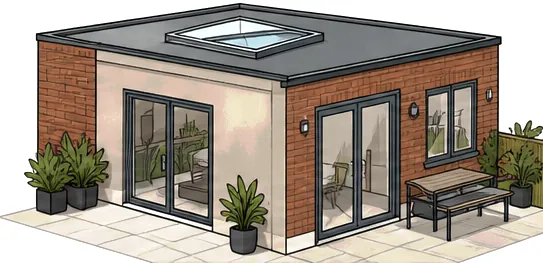
The Victorian streets of Eastwood, Masbrough and the slopes below Kimberworth have narrow rear offshoots under shallow slate or tile. Many have been extended at the back since, so the light a kitchen needs often has to come through a low lean-to or a flat roof squeezed between neighbours.
-
Hillside houses that take the weather first
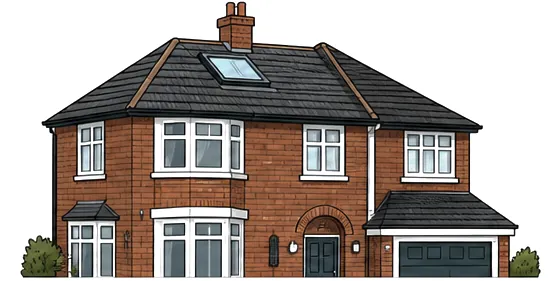
Moorgate and Kimberworth stand well above the town centre, and a roof window on those slopes meets wind-driven rain head on. We look hard at which way a roof faces there, and at a flashing that keeps water out when the rain arrives sideways.
-

Roofs that have settled out of line
Old houses across the borough sit on ground that was worked for coal and on timbers that have carried slate for a long time. Before a frame goes in we sight along the slope, because a roof that has dipped needs the frame packed level in the opening or the sash will bind.
Rotherham's houses, street by street
The oldest housing near the centre is red brick, laid out in long terraces for families who worked in the foundries, the glassworks and the pits along the valley. Eastwood and Masbrough still have streets of them, with Welsh slate on the main roof and a lower, shallower roof over the back kitchen. Loft rooms in these houses are often tight under the ridge, so the window is fitted to the rafter gap and not to the room, and a conservation-style unit with slim frames sits more neatly in an old slate slope.

Moorgate is different. Climbing the hill towards Boston Castle, the road is lined with larger Victorian and Edwardian villas in brick and stone, some now flats or offices, many with big attics that owners want to bring into use. Their roofs are steeper and taller, with room for a pair of roof windows, but several sit inside the Moorgate conservation area, and that changes what will look right from the street.
Further out, the estates of East Dene, Herringthorpe and East Herringthorpe brought semis in rows and short terraces with hipped or simple pitched roofs in concrete tile, and plenty of them now carry a single-storey kitchen extension at the back. Those flat extension roofs are the natural home for a lantern or a flat rooflight. Newer estates on the edges of Wickersley and Brinsworth add modern trussed roofs, where a wide opening through the trusses is a job for structural design, not a saw.
Weather in Rotherham is gentler than on Sheffield's western edge, because the town sits lower and further from the Pennine hills that take the first of the rain. Lower ground does not mean every roof is sheltered. A villa on the Moorgate ridge or a semi on the Kimberworth hillside faces open sky to the west, while a terrace in the valley bottom is boxed in by its neighbours and sees more damp than wind. We read each roof for which way it faces and what stands around it, then pick flashing and glass to match, rather than treating the whole town as one exposure.
Take a Welsh slate roof on an Eastwood or Masbrough terrace. Around a roof window, the slate work and the flashing wear before the glass does. A blind or a control handle is changed from the room itself, with nobody on the roof, while the glazing unit and the flashing are roof work and are planned as such. On survey day we raise one slate edge to see the state of the battens behind the slates, and we measure the rafter gap, because a frame that fits it cleanly leaves the neighbouring timbers alone and makes every later replacement simpler to carry out.
Rooflights that suit Rotherham houses
The work here follows the housing: roof windows to light terrace and villa lofts, rooflights and lanterns onto the flat-roofed extensions behind estate semis, and new units where an older light has misted or worn out. Each quote starts from the unit, lists the parts expected to wear and sets down how each one is changed, so the choice is made with year fifteen in view.
 Roof WindowsFor loft rooms under the slate roofs of Eastwood and Masbrough terraces, fitted between rafters and flashed to the slate.
 Roof LanternsOver the dining end of extensions behind semis in Herringthorpe and East Dene, where the middle of the room sits far from any wall window.
 Flat Roof RooflightsA lower, quieter alternative on extension roofs tucked under a bedroom window, common on the tighter terrace plots.
 Conservation RooflightsFor the Moorgate villas and the old village cores in the borough's conservation areas, where a flush, slimline frame leaves the slope looking as it did.
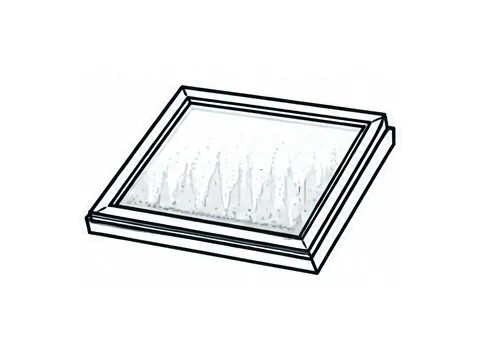 Misted & Failed Rooflight UnitsFor lights fitted when the extensions were new and now misted inside the sealed unit, where we look first at whether new glass alone would do.
 Sun TunnelsFor the windowless bathrooms and landings in the middle of estate semis, where a short tube through the loft brings daylight down.
Planning and conservation in Rotherham
Rotherham Metropolitan Borough Council
Rotherham Metropolitan Borough Council decides planning across the whole town and the villages around it. A house will usually be allowed a roof window, or else a rooflight sitting close to the slope, under permitted development, and the conditions that decide it are the same everywhere in England, so we link to them rather than repeat them: you will find them in the planning and Building Regulations guide. The case we check most carefully is a lantern that rises well above its extension roof, because its height can take it outside those rights.
What is particular to Rotherham is the number of conservation areas across the borough. Close to the town these include the Town Centre around the Minster, Moorgate on the hill to the south, and Eastwood. Further out there are village conservation areas at Wickersley, Wath-upon-Dearne and Dinnington, among others. Inside one, a rooflight on a street-facing slope draws more attention, and a conservation unit that sits flush is usually the place to start.
Several of the large Moorgate houses are now divided into flats. Roof alterations to flats and maisonettes carry no permitted development rights, so a new rooflight in a converted villa needs planning permission whether or not it is in the conservation area, and usually the freeholder's consent as well. We would raise that at the first conversation, before a survey is booked, so nobody spends time on a design that cannot go ahead.
Conservation areas
The borough has many conservation areas, including Rotherham Town Centre, Moorgate, Eastwood and Wickersley. The council's map is checked against your address, along with any added controls, ahead of any recommendation.
Among them
- Rotherham Town Centre
- Moorgate
- Eastwood
- Wickersley
- Wath-upon-Dearne
- Dinnington
Building Regulations apply to every installation, wherever the house is, and we handle the Building Control notification where the work is notifiable, whether the inspector comes from the council's own team or from a private approver who appears on the national register.
Rotherham and the ring of villages beyond it
Rotherham sits at the middle of a ring of former mining and steel villages, each with its own mix of housing. Brinsworth and Waverley lie just to the south, Waverley being newly built on old industrial land. To the north are Rawmarsh and, a little further on, Swinton. Thrybergh lies to the north-east and Wickersley to the east on the road towards Maltby. We work in all of them, and each is written up separately. Brinsworth's suburban semis have plenty of hallways and landings where a sun tunnel or a small rooflight is the simplest way to light a hall, while the new streets of Waverley mostly have modern trussed roofs and loft space that was never meant to be a room. Further out, the borough runs east to Maltby and Dinnington and south-east to older villages where stone cottages and conservation areas call for the same care we give Moorgate.
Rotherham
A Rotherham rooflight, from survey to second decade
-
Survey
Reading a Rotherham roof before quoting
The drive out from central Sheffield is about 17 minutes, 9.2 road miles to the north-east, so the survey happens on a day that suits you. On a terrace we check the slate, the rafter spacing and the line of the slope; on an estate extension we look at the flat roof covering and the joists under it. Parking on the narrow terrace streets, and whether scaffold needs to stand on the pavement, are noted at the same visit. If the house sits in one of the borough's conservation areas, we say so at this visit and quote a slimline conservation frame as well as the standard unit.
-
Fitting day
Working round slate, tile and party walls
On the old slate roofs, slates beside the opening are lifted singly and kept for relaying, because matching reclaimed slate later is harder than saving it now. On terraces the new frame stays clear of the party wall line. On extension roofs the upstand is built level, sealed into the existing covering, and checked with water before we leave.
-
First winter
Watching the new unit through the wet months
Rotherham's first winter with a new rooflight tells you most of what you need to know. Look at the reveals after a night of heavy rain, run an opening sash through its full travel, and notice whether the inner face of the glass mists on cold mornings, which suggests damp air indoors rather than a fault. Valley-bottom terraces with a busy kitchen below are where that room-side condensation shows most, and a trickle vent or the sash opened a little usually settles it.
-
Year 15
When the first parts ask for attention
Some fifteen years in, the rooflights on the more exposed slopes of Moorgate and Kimberworth will have had more wind and rain against their seals than those sheltered in the valley streets. The life plan that came with the quote names the seals, the sealed glass and any motor, plus how each one is changed, so the work can be done from the room or the roof without lifting the slate round the frame.
Rooflight questions from Rotherham homeowners
Is my house in one of Rotherham's conservation areas?
It may be if you live near the Minster, in Moorgate or Eastwood, or in a village such as Wickersley or Dinnington. The council publishes a map of them, and we check your address against it before recommending a unit.
Will a roof window fit in the slate roof of an Eastwood or Masbrough terrace?
Yes. The slates beside the opening are taken off carefully and reused, and the window is sized to sit between the existing rafters where it can. A slim conservation-style frame often suits an old slate slope best.
Can you add a lantern to the flat roof of an extension on an estate semi?
Usually, yes. The joists are trimmed around the opening, a built-up insulated upstand goes on, and the roof covering is sealed up to it. Survey is where we learn the run of the joists and whether the covering is sound enough to join to.
Who signs off the work in Rotherham?
Notifiable rooflight work goes to Building Control, either to Rotherham Metropolitan Borough Council's building control team or to a registered approver. We deal with the notification for you. After inspection you receive the completion certificate, and keep it with the house deeds for when you sell.
Does your work reach the villages outside Rotherham?
Yes. Rawmarsh, Swinton, Thrybergh, Wickersley, Brinsworth and Waverley are covered, along with Maltby and the villages further out towards the county edge. Each of those places has a page of its own, with local housing and planning notes.