Skylights & rooflights in Barnsley
Barnsley is one of the largest towns in our area, with Victorian streets round a busy centre and big post-war neighbourhoods spreading out from it. Skylights, roof windows and lanterns all have a place on its roofs, and each is chosen so the seals and glass can be exchanged later without opening the covering.

Four kinds of roof in one town
A town this size is never one housing type. Barnsley has dense Victorian streets, larger villas on its main roads, wide neighbourhoods of semis and bungalows, and modern estates at the edge. A rooflight that suits one of them can sit badly on the next, so the first question we ask is what you have, not what you want.
-
Victorian terraces near the centre
Close to the town centre the streets are lined with brick terraces under slate, sometimes with shops or workshops at the ground floor. Roofs are steep, lofts are narrow, and back yards are small. Scaffold may have to stand on the pavement, and a roof window is set to the rafter spacing, not to the room below.
-
Conservation areas close to the centre
Barnsley has three conservation areas recorded by the council close to its middle. A roof slope facing the street in one of them draws closer scrutiny than the same slope elsewhere, and a flush conservation unit is often where the conversation begins.
-

Large estates with identical roofs
The neighbourhoods built outwards from the centre repeat the same house type over whole streets. That makes roof windows and sun tunnels straightforward to plan, and also means a neighbour's earlier job is worth seeing before we quote on yours.
Barnsley's houses, from the centre outwards
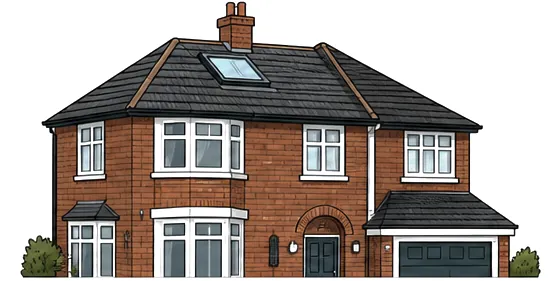
The streets around the centre are the oldest, and they are mostly brick: Victorian terraces in long rows, larger villas along the main roads, and a few older buildings among them that have been put to new use as shops, offices and flats. Roofs are slate, often patched with tiles or felt from later repairs. Chimney stacks sit on the party walls and have to be avoided when the opening is laid out, and a conservation-style frame with a slim profile sits better in an old slate roof than a thick one. Where a shop or workshop sits under flats, the roof above may belong to the freeholder, and we ask who that is before we price an opening in it. Where a roof has been re-covered more than once, we look under the top layer before trusting it to hold a frame.
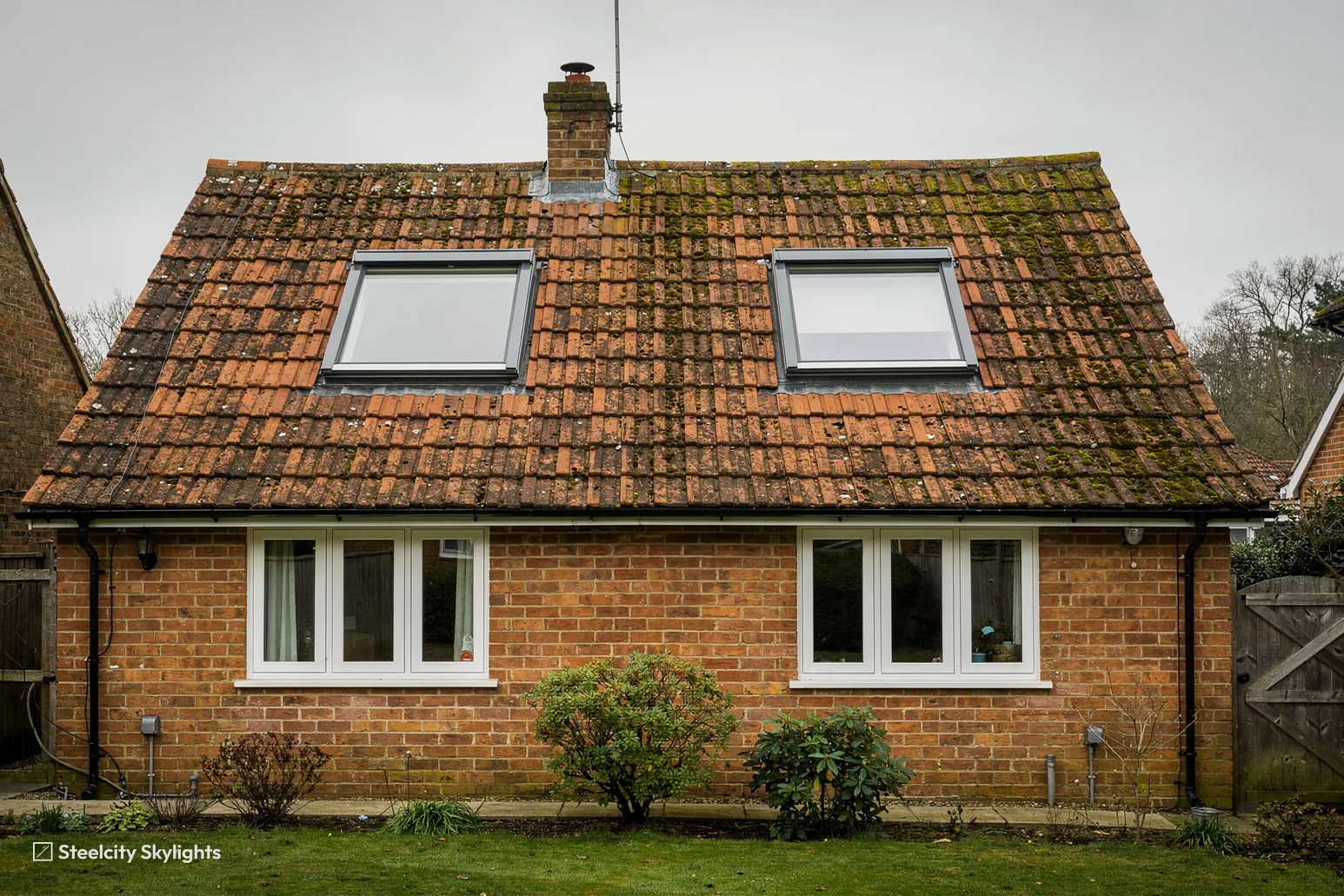
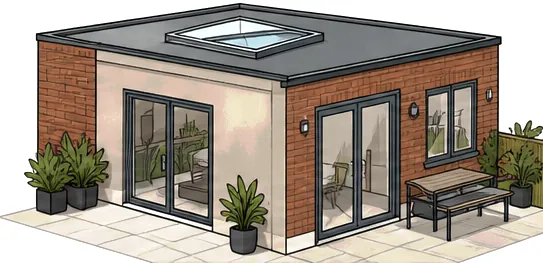
Further out come the neighbourhoods that took the town's growth across the twentieth century, among them Kendray, Pogmoor, Athersley, Lundwood, Monk Bretton and Stairfoot, along with Ardsley, Kingstone and Keresforth Hill. Most of these are semis, terraces and bungalows in brick with tile roofs, and they vary a good deal from one to the next. Many back gardens have a single-storey extension, and the flat roofs of those extensions are the obvious home for a lantern or flat rooflight.
On the edges of the town, newer estates bring modern trussed roofs. A truss gives no spare rafter to cut, so an opening wider than the space between trusses needs structural design before work begins. Bungalows and chalet houses in the same areas often have rooms in the roof, and a roof window can serve those rooms within the height rules for escape, though a loft conversion on a two-storey house needs a protected stair instead.
Barnsley sits on rising ground, and the weather varies with the street. Houses on the slopes above the centre take wind and rain from the west and north, while terraces down in the valley are boxed in and more prone to damp. We look at which way each roof faces and what stands round it, then choose the flashing and the glazing for that roof, not for a town-wide average. A slope on the windward side of a hill is also where we look first for slipped slates.
In a Victorian terrace a roof window ages differently from one in a newer house, because the slate around it is older than the unit. A slim conservation-style frame is chosen so the flashing sits close to the slate, and the plan lists the order of wear: sash seals and handle first, the glass pane next, the flashing last. The first two are renewed from inside, with the roof undisturbed, which counts on a terrace where a neighbour's stack and a party wall make scaffold awkward. At survey we check the rafter sizes, which can be lighter than modern timber, look for old patches of felt under the slate, and note how far the opening sits from the party wall so the trimming stays on your side.
Which units suit Barnsley roofs
In a town this varied, what we put forward changes from street to street: conservation units near the centre, roof windows for terrace and bungalow lofts, lanterns and flat rooflights on extensions, and sun tunnels where a hall has no daylight. A quote names the unit's wearing parts and how each is exchanged, and sets out the alternatives clearly.
 Conservation RooflightsFor homes within the three conservation areas near the centre, where a slim frame set flush lets a slate slope keep its old look.
 Roof WindowsFor loft rooms in the Victorian terraces and roof rooms in bungalows, cut to the rafter spacing and flashed into slate or tile.
 Roof LanternsOver a kitchen or family room extension on the semis of the wider neighbourhoods, lighting the middle of a deep floor plan.
 Flat Roof RooflightsFor small flat roofs over a utility room, porch or shop back room, where a low unit suits a plot with a neighbour close by.
 Sun TunnelsFor the windowless landings and bathrooms inside the terraces and semis, where a narrow reflective tube up through the loft carries light down.
 Misted & Failed Rooflight UnitsFor older units that have clouded inside or begun to leak, where we first work out whether only the sealed glass has failed.
Consents and conservation areas in Barnsley
Barnsley Metropolitan Borough Council
Barnsley Council is the planning authority here, and it also covers Penistone, Darfield, Dodworth and the other places in the borough that we serve. Permitted development takes in a great many roof windows and shallow rooflights, and the national rules are in the planning and Building Regulations guide, so we do not restate them.
The council's records show three conservation areas close to the centre: Victoria Road, Huddersfield Road, and the area around Regent Street, Church Street and Market Hill. They cover quite different ground, from residential streets to the older commercial heart. A roof slope facing the road within one is looked at more closely, so at survey the council's map is put beside your address, and we explain any extra controls before a unit is chosen.
In a town this size, buildings are often split up or changed in use: houses made into flats, and shop and workshop buildings with homes above. A flat has none of the permitted development rights a single house has, so a roof window there needs planning permission, usually with the freeholder's consent. A building that has changed use may also carry conditions from the old approval. We raise all of this at the first conversation, before a survey is booked.
Conservation areas
Barnsley's centre has three recorded conservation areas: Victoria Road, Huddersfield Road, and Regent Street, Church Street and Market Hill. Your address is compared with the council's map at survey, and any restrictions that follow are explained before we put a unit forward.
Places near Barnsley
Barnsley sits among a ring of smaller places, several of them within a few miles. Worsbrough is 1.6 miles south-east, Dodworth 1.9 miles west and Barugh Green 2.3 miles north-west, with Darton 2.7 miles in the same direction. Cudworth (3 miles) lies north-east and Royston (3.3 miles) north, while Wombwell (3.9 miles) and Hoyland (4 miles) are south-east. Pages for each of them sit elsewhere on this site. The villages around the town are smaller and their roofs simpler than the dense streets of the centre, and some of them take weather that the sheltered terraces never see.
Barnsley
Barnsley rooflights, survey to the second decade
-
Survey
Reading the street and the roof together
Barnsley is 16.3 road miles from central Sheffield, about 27 minutes to the north, so the visit is arranged around your week. On a Victorian terrace we look at the slate, the stacks and the rafter spacing, and note where the scaffold would stand and where the van can park. A flat extension roof gets its covering and joists studied. If the address lies in or near a conservation area, we say so and set a slim flush unit beside the usual frame.
-
Fitting day
Opening a town roof with neighbours close by
Close streets mean care with noise, dust and access, so we protect the rooms below and the yard before the first slate comes off. The Building Control notification, where the work requires it, is made in the course of the job. The frame is flashed to the covering, and a flat roof gets a kerb built level and sealed. Kerb and flashing are the points our 10-year guarantee leans on, so we flood-test both before we leave site.
-
First winter
What to check as the weather turns
Over the first winter, check the reveals after heavy rain, open the sash all the way and close it again, and look at the glass on frosty mornings. Mist on the inner face means damp air indoors, most often from kitchens and bathrooms, and an opening sash or a vent clears it. Mist between the panes is a fault, and we put it right. Hillside slopes show wind-driven rain first, so test those after a westerly storm.
-
Year 15
When the life plan comes round to the first parts
Some fifteen years in, the seals will have seen a great many seasons. The plan written with your quote lists the wearing parts: seals, sealed glass, any motor or sensor. It says how each is replaced, so the job is done from indoors or on the slope and the covering stays in one piece. In a town with this many different roofs, no single schedule fits them all, which is why the plan is written for your own unit and not for a type of house.
Barnsley skylight questions, answered
Does one of Barnsley's conservation areas cover my house?
It may be if you live near the town centre, where the council's records show areas at Victoria Road, Huddersfield Road, and Regent Street, Church Street and Market Hill. Your address goes against its map before we recommend a unit.
Will a roof window work in a Victorian terrace?
Yes, where the loft has the headroom. We take the slates off in order, keep them, and size the window to the rafters already there. A slim conservation-style frame leaves an old slate slope looking least disturbed.
Is a lantern possible on my extension roof?
It can be done on many extension roofs. We trim the joists to form the opening, build an insulated kerb and bring the covering up to it. The survey shows whether the existing covering is in a state to be joined.
Does a flat above a shop need planning permission for a rooflight?
Yes, because a flat has none of the permitted development rights of a house. The freeholder's consent is usually needed too. We raise this at the first conversation, before a survey is booked.
Do you work in the villages around Barnsley?
Yes. Worsbrough, Dodworth, Barugh Green, Darton, Cudworth, Royston, Wombwell and Hoyland are all in our area, and the places among them have pages about their own housing and planning.
My Barnsley terrace has slates and tiles mixed in. Does that matter for a window?
It matters for the flashing, not for the window itself. A patched slope has different thicknesses around the opening, so the flashing kit is dressed to each course and a small area may need re-covering to give it a sound seat. At survey we lift an edge where we can reach it and look at the battens underneath. Any extra work is written into the quote before you agree, with the reason for it.