Skylights & rooflights in Dodworth
Dodworth lies on the western edge of Barnsley, an older stone and brick core ringed by decades of family housing. Skylights, roof windows and lanterns are the work we do for those houses, each unit picked so its worn parts can be exchanged without opening the whole roof.

Where a Dodworth rooflight earns its place
Much of the housing here was built for families, and families run out of room before they run out of roof. The loft is the obvious answer, and the back extension the second. Both depend on light getting into the middle of a house that was planned with windows only at the front and back.
-

Semis with loft space to spare
Rows of semi-detached houses with simple pitched roofs often have a roof void far larger than the family uses. One roof window, or two, turns that into a bedroom or a study, but only if the stair, the headroom and the rafters allow it, and we check all three before we promise anything.
-
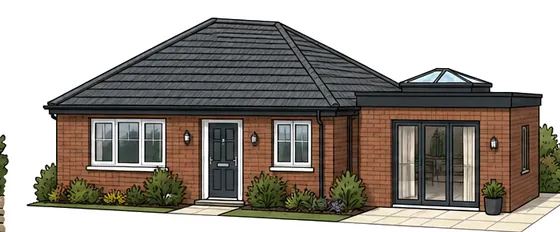
Bungalows that want daylight in the middle
Bungalows have long, narrow plans, and the hall and inner rooms can feel dim even on a bright day. A sun tunnel or a small flat rooflight over the passage works with the roof as it stands, and usually asks far less of it than a new dormer would.
-
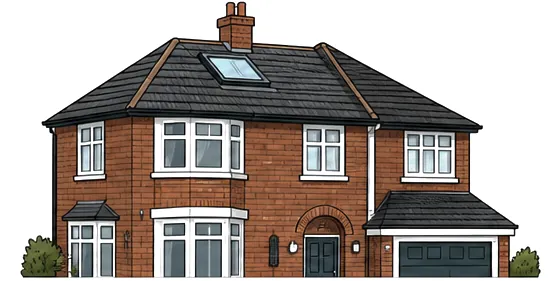
Extensions with deep floor plans
A kitchen built out into the garden can finish up twelve feet from the nearest window. A lantern or a flat rooflight set over the far end of the room brings light across the whole floor, as long as the roof under it is sound enough to join to.
Dodworth's houses, from the old core to the edges
The oldest part of the village has stone and brick houses along its main routes, with smaller cottages and a few farm buildings behind them. These carry slate or stone slate roofs that have been patched over the years. Loft space under them is modest and awkward, so any window has to be fitted to whatever width the rafters leave free, whatever the room beneath looks like. Where a roof is part stone slate and part newer tile, we match the flashing to whichever covering the frame sits in.

Beyond the core come the housing estates that spread the village outwards during the twentieth century: semis, short terraces and bungalows, largely in brick with concrete tile. Their roofs are plain and regular, which makes them straightforward to open up, and plenty of them carry a flat-roofed kitchen extension at the back. Those extensions are where a lantern or flat rooflight does the most good, and also where an older rooflight, fitted when the extension was new, may now be failing. A hip or a gable end changes where a roof window can sit, because the flashing needs clear slope above and below the frame, so we mark the position on the roof before any tile is lifted. Where a roof has been re-covered once already, we look at what the new tile sits on before we trust it to hold a frame.
The newer streets on the edges of the village are a different job. Modern trussed roofs have no loose rafters to trim in the usual way, and a wider opening there is structural design, not a job for a saw. Their loft space may never have been meant as a room, so we start with what the trusses will allow and design the opening from there. Where a loft has been boarded and insulated by a previous owner, we also look at how the insulation will be dressed round the new opening, since a gap there shows up as a cold patch on the ceiling within the first winter.
The village sits on a gentle rise, and the western edge catches more weather than the lower ground towards Barnsley. That is not the exposure of the Pennine fringe, but it is enough to matter. A roof facing west across open fields wants a more careful flashing than a roof in the lee of its neighbours, and the glazing is chosen to match. Chimneys, vents and old aerial brackets on the slope all affect where the frame can go, and we mark the roof before anything comes off.
Flat-roofed kitchen extensions deserve a closer look because their rooflights are often the oldest part of the room. A unit put in when the extension was built may have a plastic dome or a single-glazed panel, and by now it is likely to be yellowed, crazed or leaking at the edge. Replacing it is mostly a matter of lifting the old frame and setting a new upstand and glazing in its place, with the roof covering joined back to it. What wears afterwards is the edge seal and the covering around the kerb. From inside, a blind or a vent can be changed without disturbing the roof. At survey we check which way the joists run, whether the upstand is sound and how the felt has been dressed, because those decide whether the old opening can be reused.
What suits a Dodworth roof
Three kinds of job come up in Dodworth: roof windows for semi lofts, lanterns and flat rooflights on the extensions behind them, and sun tunnels for halls and bungalows. Older lights that have misted are swapped too. The quote spells out which parts of the unit wear and how they are changed, and where a house offers two sensible answers it sets both side by side.
 Roof WindowsFor the spare loft space over family semis, sized to the rafters and flashed into concrete tile or slate.
 Sun TunnelsFor dim halls, landings and inner bathrooms in bungalows and semis, where a narrow light shaft up through the roof void brings daylight down.
 Roof LanternsOver the far end of a deep kitchen extension, lighting the middle of the room that no wall window reaches.
 Flat Roof RooflightsA lower, quieter option over a small rear extension, utility room or porch where a full lantern would stand too tall.
 Misted & Failed Rooflight UnitsFor rooflights that clouded years after an extension was built, where the first question is whether a new sealed glass unit would be enough.
 VELUX WindowsFor homeowners who have settled on that make, with the size code checked against the opening before anything is ordered.
Consent and conservation for Dodworth roofs
Barnsley Metropolitan Borough Council
Dodworth falls under Barnsley for planning. Permitted development covers many roof windows and shallow rooflights, and the national rules that settle it sit in the page linked below, not here. Tall lanterns on flat roofs are the one case we measure twice, because height can pull them outside those rights.
The planning data we use records no conservation area at the centre of the village. We do not take that as the last word, because boundaries and extra controls can change. The council's present map is laid over your address at survey, and anything it shows is raised first. Houses on or near the older streets are the ones where we look hardest.
A divided house loses the permitted development rights that a single dwelling keeps, so flats need planning permission before anything else. The same goes for any property where an earlier consent limits roof changes. If you hold the decision notice for an extension or a conversion, bring it to the survey.
Conservation areas
The data we hold records no conservation area at the heart of Dodworth. We still read the current council map against your address at survey, with any other restrictions, before proposing a unit.
Close to Dodworth
Dodworth sits close to Barnsley, so the towns around it are very near. Barugh Green is 1.8 miles north, Barnsley 1.9 miles east, Worsbrough 2.5 miles east, and Darton 2.6 miles north. Penistone, up on the higher ground, is 4.4 miles west. Hoyland (4.7 miles, south-east), Royston (4.8 miles, north-east) and Deepcar (4.9 miles, south) complete the ring. All of them have pages on this site. Moving west from Dodworth towards Penistone, the ground climbs and the weather hardens; moving east into Barnsley, the housing gets denser and the plots tighter, and the choice of unit follows.
Dodworth
Dodworth rooflights through the decades
-
Survey
What we measure in Dodworth before quoting
Dodworth is 15.3 road miles from central Sheffield, about 24 minutes to the north, so the survey is arranged for a time that fits your week. In a semi we measure the rafter spacing and the headroom at the stair. In a bungalow we follow the path a sun tunnel tube would take through the void, and on a rear kitchen we study the flat covering and the joists under it. Where the roof is a newer truss design, we say at once what the trusses allow.
-
Fitting day
Opening the roof and weathering it before we leave
Whatever the roof, the opening is weathered before we leave. Tiles are taken off and set aside, the structure is trimmed where it needs to be, and the frame is flashed into whichever covering it sits in. On an extension roof the kerb goes in level and is sealed to the existing membrane, then tested with water. Kerb and flashing are the joints our 10-year guarantee rests on. Any Building Control notification the work needs is handled as part of the fit.
-
First winter
What the first wet months should show
Give the new rooflight a hard look after the first heavy rain. The reveals should be dry, an opening sash should run smoothly through its travel, and any mist on the glass should sit on the inside face only. Inside mist points to humid air in the house, most often from a kitchen, and it clears with a little ventilation rather than a repair. Tell us if any of those three checks fail, and we come back to look.
-
Year 15
What the life plan puts on the list
About fifteen years in, the seals on slopes facing the open west will have worked hardest. The quote's life plan names them, the sealed glass and any motor or rain sensor, and says how each is changed. Wherever possible that work is done from inside or from the roof surface, and the surrounding covering stays put.
Dodworth skylight questions, answered
Can the loft of my semi take a roof window?
Often, if there is enough headroom and the rafters allow it. At survey we measure the height at the stair head and the gap between rafters, and we tell you plainly whether the loft can become a room or only take daylight.
What can I do for a dark hall in a bungalow?
A sun tunnel or a small flat rooflight is usually the neatest route. The tube or light well runs through the roof void to the ceiling below, and no new dormer is needed. We check the route for pipes, cables and insulation first.
Does the age of my extension matter for a lantern?
It does. We need to know the state of the flat covering and the joists, and whether they can carry an upstand. An older roof near the end of its life may be better replaced at the same time, and we say so at survey.
Does Dodworth have a conservation area of its own?
None is recorded near the centre in the data we use. The council's current map still goes over your address at survey, so any extra controls come to light before a unit is chosen.
Can you also work in Barnsley and the villages near Dodworth?
Yes. Barugh Green, Darton, Worsbrough, Hoyland, Royston and Penistone all lie inside our area, along with the lanes and farms between them, and each of those has its own housing page.
My old kitchen extension rooflight at the back of a Dodworth semi is yellowing. Can it be replaced?
A tired rooflight can be taken out and replaced with a modern unit on a new upstand. At survey we look at the joists, the kerb and the covering around the old frame. If the opening is sound we reuse it, and the new glazing is chosen to meet current insulation limits. Part of the work is notified to Building Control, and we handle that.