Skylights & rooflights in Doncaster
Few places in our area have as many kinds of roof as Doncaster: Victorian terraces near the centre, 1930s semis and detached houses in the suburbs, bungalows, and modern estates on the edges. Wear parts are itemised in every quote, so seals, glass and any motor can be replaced later with the roof covering left in place.

Terraces, suburbs and protected streets: Doncaster's rooflight questions
With a population of over 87,000 in the built-up area, Doncaster is not one kind of place. The roof on a terrace by the railway lines is a different problem from the roof on a large detached house in Bessacarr, and a rooflight that suits one can be the wrong answer on the other. We take each street on its own terms.
-
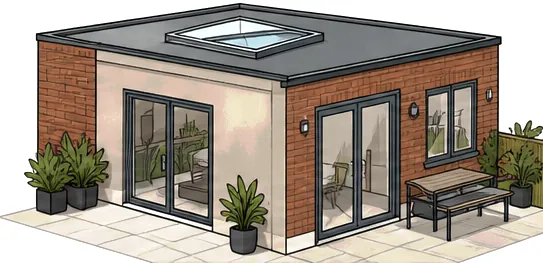
Terraces with tight back rooms
Victorian and Edwardian terraces around Hexthorpe, Balby and the older streets near the centre have narrow rear offshoots and small loft rooms. Light for a back kitchen often has to come through a low roof squeezed between neighbours, and a loft room needs a roof window cut to the rafter gap, not to the plan.
-
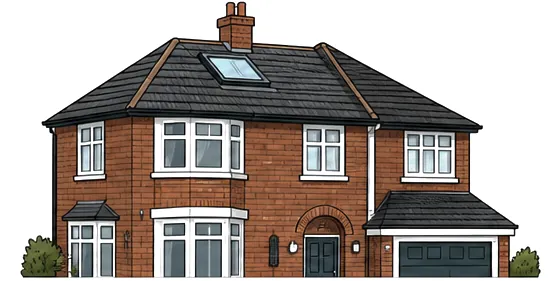
Larger houses with big roofs
Suburbs like Bessacarr and Cantley carry bigger inter-war and later houses with deep lofts and roofs of several planes. The opportunity is real, but so is the care needed: more roof means more flashing, more structure to read, and more ways for earlier alterations to complicate the job.
-

Streets under conservation and other controls
The planning data lists several conservation areas close to the centre, and an Article 4 direction for houses in multiple occupation. These do not stop rooflight work, but they mean the address has to be checked before a unit is chosen, particularly for a slope that faces a street.
From Victorian terraces to modern estates
The oldest housing close to the centre is Victorian and Edwardian brick, laid out in terraces and semi-detached villas around streets like those near South Parade and Thorne Road. Roofs are slate or tile, often with a shallower roof over a rear kitchen. Some of the larger houses have been divided into flats, which changes what planning rules apply, and others have been rebuilt inside while the roofline stays original. A slim, flush frame suits an old slate slope. Where a roof near the centre sits behind a parapet or a neighbouring gable, that affects both the access and the way a frame is flashed.

Moving outward, Balby, Wheatley and Intake add long rows of semis from the 1930s to the 1960s in brick and render, with hipped tiled roofs and gardens front and back. Rear extensions are widespread, and so are loft conversions, which means a roof may already carry dormers or windows whose age and condition matter. Where an older roof window has failed, replacing it in the existing opening is usually simpler than cutting a new one.
To the south and east, Bessacarr, Cantley and Wheatley Hills bring detached houses and bungalows on roomier plots, and newer estates in modern brick with concrete tile and trussed roofs. Bungalows have central halls and bathrooms with no outside wall, so a tube or a window in the slope is often the only way to give them daylight. Trussed roofs need an engineer's design before anything is cut, so we establish the construction before discussing an opening.
Lofts converted some years ago deserve a second look at this stage. A conversion done decades back may rest on a floor, a stair and a roof window that no longer meet current expectations, and the glass in an old window may be single-glazed. A replacement is the moment to bring the opening up to present standards, and we explain what that involves before quoting.
Because the city is so large, weather differs from street to street. Roofs on the open eastern edge take wind from across flat ground, while terraces boxed in by neighbours in the older districts see more damp than gale. Each house is judged on how its roof faces and what stands around it, and that settles the flashing, the glass and the opening method.
Look at the Victorian and Edwardian terraces and villas near the centre. A slim roof window in a slate roof wears at the flashing and at the seals, and the old slate around it is the part that can fail when disturbed. Indoors, a new blind or lining is a quick swap that leaves the slope alone, while a failed sealed pane means work from outside because it forms part of the sash. At survey on a roof like this, the questions are practical: how the slates are fixed, what the rafters are like, and whether a parapet or a neighbouring gable affects access to the roof. Where a house has been divided into flats, we find out which flat owns the roof slope before anything is priced.
Rooflight choices across Doncaster's streets
The range is wide: terrace and bungalow lofts get roof windows, rear extensions get flat rooflights or lanterns, protected streets get conservation units, and fogged lights get replacements. Each quote names the unit and says how each part is changed.
 Roof WindowsFor the loft rooms of Victorian terraces and inter-war semis, framed between the rafters, with flashing dressed over slate or concrete tile.
 Flat Roof RooflightsOver the flat-roofed kitchens built onto the back of terraces and semis, with the middle of the room well away from any wall window.
 Roof LanternsOn larger rear and side extensions in the leafier suburbs, where a lantern can light a dining area from above.
 Conservation RooflightsFor houses in or beside the city's conservation areas, where a flush frame on a quiet slope keeps the roof looking as it was.
 Sun TunnelsFor the windowless halls, landings and bathrooms of bungalows and semis, brought daylight through a short tube.
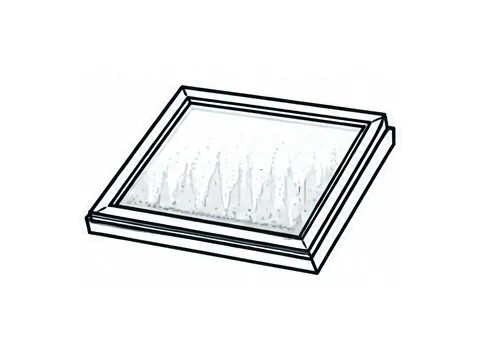 Misted & Failed Rooflight UnitsFor lights fitted with loft conversions and extensions years ago that have fogged, where the first check is whether the glazing alone will come out.
Consents, conservation areas and inspections in Doncaster
City of Doncaster Council
Planning applications in the city go to City of Doncaster Council. The guide to planning and Building Regulations on this site covers the national conditions that decide when permission is needed for a skylight or low roof window. A lantern rising well above a flat roof is checked most closely.
Doncaster has more conservation areas near the centre than most places in our area. The published planning data names South Parade, Bennetthorpe, William Nuttall Cottage Homes, Thorne Road, the Market Place, Town Field, Christchurch, St. Georges and High Street. Within one, a slope seen from the street gets the closest look, and a flush conservation unit on a rear or side slope is the usual starting point. At survey we consult the council's map for your address, and explain the outcome plainly.
The same data lists an Article 4 direction for houses in multiple occupation, in force since October 2019. It concerns change of use and does not govern a rooflight, but it can matter if a house is, or is becoming, a shared house, so tell us if that applies. Flats and maisonettes, converted houses in particular, carry fewer rights than ordinary houses and may need the freeholder's consent as well.
Windows in busy kitchens and bathrooms collect condensation in winter wherever the house stands. That is a ventilation matter for the room more than a defect in the unit, and we cover it at survey so the choice between a fixed and an opening sash fits how the room is used.
Conservation areas
The published data names conservation areas including South Parade, Bennetthorpe, Thorne Road, Market Place, Town Field, Christchurch, St. Georges and High Street, plus an HMO Article 4 direction. A house near any of them is checked at survey before a unit is priced.
Among them
- South Parade
- Bennetthorpe
- Thorne Road
- Market Place
- Town Field
- Christchurch
- St
A new or replacement rooflight is controlled work under the Building Regulations. The inspection can be done by the council's team or by a private registered approver. The notification is ours to manage, and the completion certificate reaches you when the work has passed.
Doncaster and the districts we reach from it
Cusworth is 1.6 miles north-west of Doncaster, Bentley 1.7 miles north and Sprotbrough 2.4 miles west. Warmsworth is 2.5 miles south-west, Armthorpe 3.2 miles east and Kirk Sandall 3.7 miles north-east. New Rossington lies 4.1 miles south-east and Adwick le Street 4.2 miles north-west. Every one of those places has its own page, and all are inside our area. Sprotbrough and Cusworth have larger houses on generous plots, Armthorpe, Kirk Sandall and New Rossington are largely estate housing and bungalows, and Bentley and Adwick le Street bring older terraces and mining-era streets. The survey is the same in each: it starts with the roof.
Doncaster
A Doncaster rooflight, from first look to year twenty
-
Address check
Matching the house to its controls
Doncaster is 22.1 road miles to the north-east of central Sheffield, about 30 minutes, so we can arrange a visit at a time that suits you. Before it, we look up the address against the conservation areas and the Article 4 boundary. At the house we then read the roof itself: the covering, the rafter spacing, the pitch and, on a terrace, whether a party wall limits where a frame can go.
-
Access
Planning the day for a city street
A terrace with no rear access means everything goes through the house or over the roof. We plan where the scaffold stands, whether the pavement is affected and how glass is carried in. On a large suburban plot access is easier, but the lantern or window still needs a safe route for lifting, which we settle at survey.
-
First winter
Watching how the unit behaves in the cold
Through the first winter, watch the reveals after heavy rain and open any sash all the way. Condensation on cold mornings is damp indoor air, and busy kitchens and bathrooms show it most. A trickle vent or opening the sash for a few minutes usually settles it; if it does not, we check the seals.
-
Year 20
When the older parts ask for attention
By the twentieth year, seals and any motor will have had a long run. The written plan that comes with the quote names those parts, along with the glass unit, and describes each replacement. The aim is a swap that leaves the covering around the frame alone.
Doncaster roof questions, answered street by street
Which Doncaster conservation areas might include my house?
Nine are listed near the centre in the published data, among them South Parade, Bennetthorpe, Thorne Road, the Market Place and High Street. At survey we consult the council's map for your address and explain the result before a unit is suggested.
Does the HMO Article 4 direction stop me fitting a rooflight?
No. That direction deals with turning a house into a shared house and does not govern a rooflight. It is still worth telling us if your property is let to several tenants, as the use may affect other rules.
Does a Victorian terrace loft take a roof window?
Usually, yes. Slates round the opening come off and go back on, and the window is cut to sit between the existing rafters. Whether the loft is a usable room is a separate question about the stair and escape route, which we raise at survey.
Who checks the building work on a Doncaster rooflight job?
Building Control receives notifiable work, either through the council's own team or through a registered approver. We send the notification, and the completion certificate arrives once the inspection has passed.
What does your guarantee cover?
A 10-year guarantee covers our workmanship: the fitting, the flashings and the weathering of the opening. Glass and moving parts have the maker's own cover, and the written life plan shows which part falls under which.
Do I need the freeholder's consent for a Doncaster flat's roof window?
If the roof is shared, the freeholder or the owner of the roof slope usually has to agree before any opening is cut, whatever planning rules say. The survey establishes which roof the window would sit in and who owns it. Planning rules for flats also differ from those for houses, so we look at that early and can talk it through with whoever is responsible for the building.