Skylights & rooflights in Warmsworth
Right on the south-western edge of Doncaster, Warmsworth has roofs that are a mix of older village brick, inter-war semis and bungalows with loft rooms. Every quote here comes with a plan for the wearing parts, so a seal or a pane can be swapped in years to come with the covering left alone.

Bungalow lofts, extensions and open edges: Warmsworth's rooflight questions
Warmsworth sits between the town edge and the open country towards Conisbrough, so a street of similar semis can still hold roofs of quite different ages. A rooflight that suits the newest roof in a row can be wrong for the oldest, which is why we look hard at the actual roof first and leave the catalogue until later.
-

Bungalows with a loft nobody has used
Bungalows and dormer-less chalets are a natural fit for roof windows, because the room is already under the slope and only the light is missing. What decides the job is the roof structure behind the plasterboard: whether the rafters are cut timber or factory trusses, and how much of the loft floor has been boarded or insulated over the years. We measure the depth of the insulation as well, because it decides how far a roof window can sit below the ridge.
-
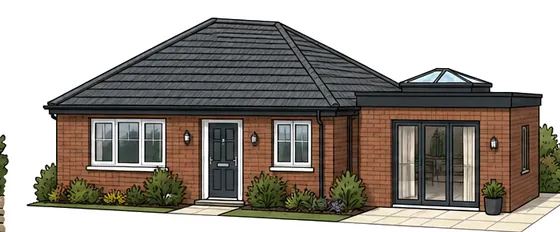
Rear extensions on older semis
Plenty of the semis here have gained a kitchen or garden-room extension behind them, usually with a flat or very shallow roof. That roof is where a rooflight or lantern can pull daylight into the dim centre of the room, but the existing covering and the joists under it have to be sound enough to take a new upstand.
-
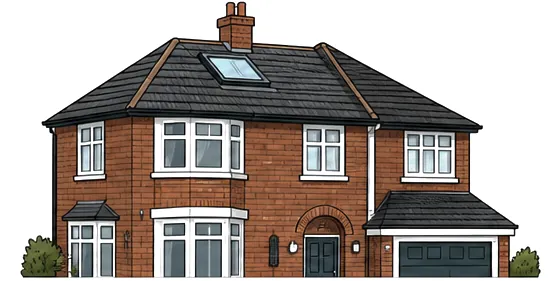
Exposed roofs facing open ground
On the edges of the village the roofs face fields and open sky rather than another row of houses. Wind-driven rain reaches a roof window there with nothing to break it, so the flashing detail and the sash seals matter more than they would in a sheltered cul-de-sac.
Bungalows, semis and the village edge
The older core of Warmsworth is a village layout, with brick houses and cottages facing the road and a scattering of larger houses set back in their own plots. Roofs there tend to be pitched, in clay pantile or slate, and some have been re-covered in concrete tile at some point in the last century. A roof window in a pantile slope needs the tiles lifted and relaid around the frame, and a flashing kit made for that profile, because a flat-tile kit will not seat on a curved tile.

Beyond the core, the housing is mostly twentieth-century: pairs of semis on estate streets, short terraces and a fair share of bungalows. We see the same pattern repeated along many of these streets. A hipped or gable-ended roof in concrete tile, a through-lounge, and a kitchen at the back that gets little light in the middle of the day. That kitchen is the room that gains most, whether through a flat rooflight over the work area or a lantern where the extension is large enough.
Bungalows deserve their own mention. The hall and bathroom often sit in the middle of the plan, with no outside wall, and the only way to give them daylight is through the roof. Where the loft above is shallow, a sun tunnel can bring light down a short tube without any structural opening. Where the roof is cut timber with usable height, a roof window opens up a proper room, which is a bigger job: rafters are trimmed and the structure rules apply.
Warmsworth is close enough to Doncaster that the newer streets feel joined to the same built-up area, but the village still has a distinct edge, and the roofs at that edge are the most exposed. Facing and surroundings decide the flashing, the glass and the opening method. That holds for a bungalow on a side street and for a detached house at the village edge alike: the choice follows the roof.
Clay pantile in the older core ages in its own way, and a window set in it needs a plan to match. The curve of the tile means the flashing kit has to be one made for that profile, and the apron at the sill is the part to watch over time, since that junction carries the most water. The sash seals and the glass pane can be renewed from inside the room, leaving the tiles alone. At survey we check how the pantiles are hung, compare the batten spacing with the tile, and look for broken or slipped tiles near the opening that would let water behind the flashing. A tile that cracks on lifting is replaced with the closest match available, and we say so in advance.
Which rooflight for which Warmsworth roof
Bungalow lofts, rear extensions and tired older lights make up the shape of the work in Warmsworth. Each quote spells out what will wear on the unit and what swapping each part involves. Roofs on the village edge get a second look at the flashing, since they face open ground.
 Roof WindowsFor bungalow and chalet lofts where the room already sits under the slope, framed into the rafters and flashed to suit pantile or concrete tile.
 Flat Roof RooflightsOver the back of an extended semi, where a kitchen has plenty of floor but little daylight in the middle.
 Roof LanternsOn a larger garden-room or kitchen extension, where the roof is wide enough for a lantern to bring light down onto a dining table.
 Sun TunnelsFor the internal hall or bathroom of a bungalow, where a short tube running through a shallow loft can light the room with no structural opening.
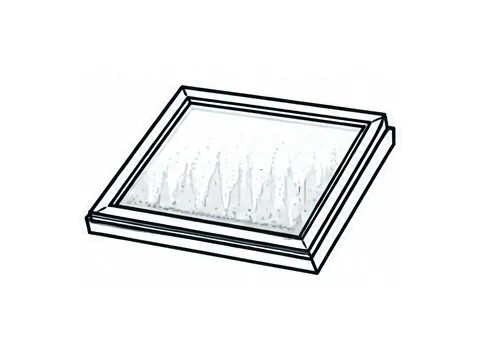 Misted & Failed Rooflight UnitsFor a light fitted with an earlier extension that has fogged between the panes, and the first thing to establish is whether the glass unit alone will come out.
 Electric & Opening RooflightsWhere a rooflight sits too high to reach, such as a stairwell or a kitchen extension with a tall ceiling, and a motor lets it vent without a pole.
Consents and boundaries around Warmsworth homes
City of Doncaster Council
City of Doncaster Council decides planning matters for Warmsworth. Whether your house needs an application for a roof window or a low-level rooflight is settled by national rules, which our planning and Building Regulations guide goes through. The detail lives there. We look twice at any lantern that stands tall on its flat roof.
The published planning data lists two conservation areas around here, Warmsworth and Sprotbrough. A house within either has a road-facing slope that the council will care about, so a flush conservation unit is the first thing we would show you. The boundary lines are checked for your address when we visit, and the outcome reaches you before a unit is chosen.
Flats and maisonettes are treated differently from houses, and a converted property may also need the freeholder's agreement. If that is your situation, say so on the first call.
Conservation areas
The published data shows Warmsworth and Sprotbrough as conservation areas near the village. If your road falls inside either, that comes out at survey and shapes which unit we price.
Building Regulations cover the work whoever does it. The city council's building control officers can inspect, as can an independent registered approver. The notification is ours to send, and the completion certificate is yours once the work has passed.
Warmsworth next to Sprotbrough and Cusworth
Sprotbrough is the nearest neighbour, 0.9 miles north, with Cusworth 2.4 miles north and Conisbrough 2.5 miles south-west. Doncaster centre is 2.5 miles away to the north-east, Bentley 3.6 miles beyond it on the same line, Mexborough 4.5 miles west, New Rossington 4.8 miles east and Adwick le Street 5.1 miles north. Every one of those sits inside our area, with a page of its own for each. Sprotbrough's larger houses and Cusworth's quiet streets raise different questions from the estates of Bentley, while Conisbrough and Mexborough bring older terraces on slopes that suit another kind of unit. Wherever you live in the village, the first job is looking at the roof.
Warmsworth
Warmsworth: the first visit, the first winter and year ten
-
Survey
What we check on a Warmsworth roof first
From central Sheffield it is 19.8 road miles to the north-east, about 26 minutes, which makes a survey easy to fit round your week. In a bungalow we go into the loft to see whether the roof is cut timber or trusses and how deep the insulation lies. On an extension we study the felt or membrane and which way the joists run. If the address is near one of the conservation areas, we show you a flush unit alongside the standard option.
-
On the roof
Working round pantile, tile and a flat extension roof
Pantile roofs need care: each tile round the opening comes off in turn and goes back over the new flashing so the curve sits true. On concrete tile the work is quicker but the same discipline applies: battens are cut back only as far as the frame needs. On a flat extension the upstand goes up level, the old covering is bonded to it, and we test with water before the ladder comes down.
-
First storm
Watching the new unit through its first hard weather
The first proper storm after fitting is the useful test. Look at the reveals the next morning for any staining, and open any sash all the way to its stop. Edge-of-village roofs that face open ground get the worst of it, so if a seal is going to show a weakness, it tends to show there first. If the glass fogs on cold mornings, suspect damp indoor air before suspecting the unit; a trickle vent, or a window left ajar for a short while, normally clears it.
-
Year 10
The seals and the glass come due
By the tenth year the seals on the more exposed Warmsworth roofs have taken far more weather than those tucked between neighbours. Alongside the quote you receive a written plan naming the seals, the glazing and any motor, with the replacement of each described, so the covering round the frame never needs lifting.
What Warmsworth homeowners ask before a survey
Does Warmsworth have a conservation area that covers my street?
Possibly, if the road is near the old village centre or the Sprotbrough side. Published data lists a conservation area for Warmsworth and another for Sprotbrough. The boundary is checked against your house at the survey, and the answer comes before any unit is chosen.
Will a bungalow roof that has never been converted take a roof window?
Often it can, and the rafters are the first thing we check. A cut timber roof can take a roof window once the rafters are trimmed and a header fitted, which is structural work and needs sign-off. A roof built from trusses is different, and the opening may need an engineer's design before anyone cuts anything.
What can be done for a windowless hall or bathroom in a bungalow?
A sun tunnel is usually the simplest answer: a small dome on the roof, a short reflective tube and a diffuser in the ceiling. Most lofts need no new structural opening for it, though ducts, cables and insulation on the way down are checked first.
Who checks the finished rooflight in a Warmsworth home?
Notifiable work is inspected under Building Control, by City of Doncaster Council's own team or by an independent registered approver. The notification is something we arrange ourselves, and the completion certificate reaches you after the inspection.
What does the guarantee cover on a Warmsworth job?
The firm stands behind its own workmanship for ten years: the fitting, the flashings, the weathering. The maker's cover on glass and moving parts is a separate matter, and your written life plan shows where one ends and the other begins.
Can a roof window in a pantile roof be renewed without relaying the tiles?
Usually the sash and the glass pane can, because they are renewed from inside. The frame and flashing are different: replacing a pantile flashing means lifting the tiles around it, so it is a job to plan rather than rush. Your plan lists which parts fall in which group, and a like-for-like frame swap reuses the existing opening so the structure is not touched.