Skylights & rooflights in Adwick le Street
Adwick le Street has an old village centre, planned colliery-era housing and wide modern estates, all within a short distance of each other. Across them we supply and renew skylights, roof windows and rooflights, and each quote names the parts that will need changing later and shows how to do it without disturbing the roof.

Three questions Adwick le Street roofs put to a skylight
A place with an old core and several newer districts has roofs from many periods, and the village is divided: parts are on the council's conservation list and parts are plain suburb. That makes the first job at survey a simple one, which is working out what kind of roof and what kind of street the rooflight is going into.
-
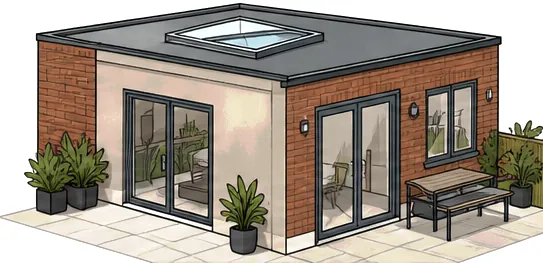
Older roofs that need a gentle hand
Tiles and slates on the older houses have weathered and sometimes sag. Before any frame is ordered we look along the slope and test the rafters, because a sash in a roof that has moved will bind unless the opening is packed true.
-
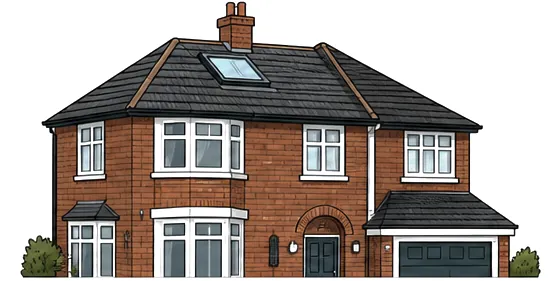
Planned housing with matching rows
Where houses were built together, rows of identical roofs face the same street. A rooflight on the front slope is seen from the road along the whole row, which is why we think about the front and the back separately.
-

Estates beyond the old centre
The later estates have conventional pitched roofs that are quick to survey, but the loft in many of them was never a room. Turning it into one raises headroom, stairs and escape questions that we answer before quoting.
Adwick le Street's houses, from the village core outwards
Around the old centre of Adwick le Street the housing is older and more varied: brick houses and cottages of different sizes, some with tiles replaced over the years in a patchwork of colours. A skylight on one of these has to sit in a roof that was never uniform, which is why we measure each slope on its own. Slim, flush frames are usually the better fit here, whether or not a conservation area applies.
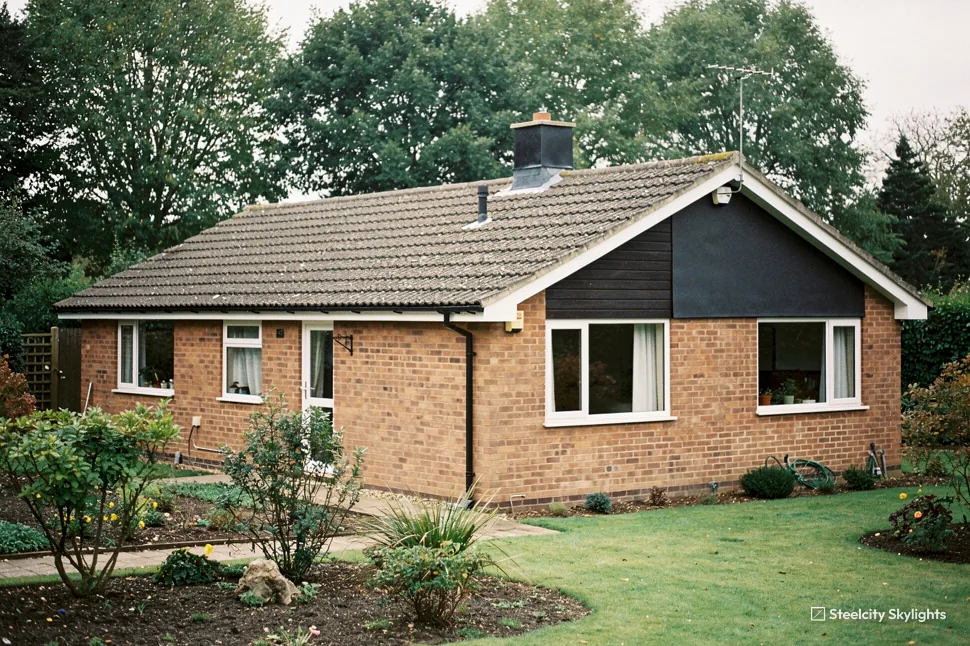
Woodlands is a district of its own, named on the council's conservation list, and it is the kind of place where the roofs facing the street are part of what makes it look as it does. In a house like that a rooflight usually goes on the rear slope, with the front left alone.
Beyond these lie the larger estates that make up most of the modern town, with the districts of Highfields and Carcroft among them, folded into this page. The houses are semis, bungalows and short terraces in brick with tile, and many have been extended at the back. For these, a roof window above the stairs, a sun tunnel in a bathroom or a lantern on a rear extension are the usual conversations.
The land here is low, and the weather arrives over open ground. A west-facing roof takes more rain than an east-facing one, and the rooflight on it needs a flashing that has been set carefully. We note the aspect of every slope at survey and choose glass and seals to suit it, instead of using the same specification for every house.
Extensions in this part of Doncaster often mark the join between old and new. A kitchen added behind an older house will have a flat or lean-to roof that meets the old wall, and the junction is where leaks start. A new lantern or rooflight is a good moment to look at that joint properly and put the flashing right.
Chimney stacks are another feature of the older houses. A roof window near a stack has to leave room for the flashing and for the work to the stack, so we mark positions with a clear margin and avoid placing an opening where it would make both jobs awkward.
Older brick houses whose tiles were replaced in patches over the years are not a single roof, and a window set in one ages along with whichever tiles surround it. Where the covering is newer concrete, the flashing sits easily. Where an old clay tile remains, it can crack when lifted, so we plan for a replacement before the day. A flush frame, which sits close to the covering, takes less flashing and shows less, and its sash seals and glass pane are renewed from inside. At survey we mark which slope has which covering, check the battens beneath each patch, and look for lead or felt lines from earlier repairs that the new flashing must tie into. A soft batten is renewed before the frame goes in.
Rooflights for the different streets of Adwick le Street
The work here covers roof windows for lofts, rooflights on rear extensions, sun tunnels for windowless rooms and replacement where an older unit has clouded or started to leak. Each quote names the unit and its short-lived parts, then explains how they are changed and whether that means opening the roof.
 Conservation RooflightsFor houses near the old village centre and in Woodlands, where a low-profile frame keeps the roofline quiet.
 Roof WindowsFor lofts above the semis and bungalows of the newer estates, fixed between the rafters, flashed to the tile.
 Sun TunnelsFor landings, hallways and bathrooms that sit in the middle of a house, where a short tube brings daylight down.
 Roof LanternsFor rear extensions, where a lantern brings daylight to the centre of a kitchen or dining area reaching back from the old house.
 VELUX WindowsFor a house that already has VELUX roof windows, replaced in matching sizes where the fit is right.
 Misted & Failed Rooflight UnitsFor extension lights that have clouded or begun to drip, where we check whether the glass alone can be replaced.
Adwick le Street: conservation areas, consent and paperwork
City of Doncaster Council
Doncaster decides planning here. A house normally takes a flush roof window or a shallow flat rooflight as permitted development, on national conditions we do not repeat; the guide linked below has them. Flats and maisonettes are outside them.
Adwick le Street has a conservation list of its own. The council's data names two areas near the centre, Adwick-le-Street itself and Woodlands, and we do not assume which streets they cover. Your address goes onto the council's plan at survey. If it falls inside, we show you a conservation unit beside the standard option, with a plain account of the difference.
In a conservation area the road-facing slope draws the attention, and the sensible default is to put the rooflight on the back. Where only the front will do, a flush unit with a slim frame is the starting point, and it is worth speaking to the council before design is settled.
If you live in one of the folded districts, Highfields, Woodlands or Carcroft, the council's boundary may run through the middle of a street rather than around it. So we check the exact address and not the district name.
Conservation areas
Adwick-le-Street and Woodlands are the two conservation areas the council's data places near the centre. We match your address to its plan at survey and show you the options that fit.
Building Regulations apply in every house. Should the job be notifiable, the Building Control notification goes from us, either to Doncaster or to a registered building control approver, and the certificate at the end is what a later buyer will ask to see.
Beyond Adwick le Street: Bentley and Askern
Doncaster itself is 4.2 miles to the south-east. Bentley (2.5 miles south-east) and Cusworth, 2.9 miles south, are the closest. Askern is 3.3 miles north-east, South Elmsall 4.1 miles north-west, Sprotbrough 4.2 miles south, Upton 4.9 miles north-west, and Kirk Sandall 5 miles east. They all have pages to themselves. The housing shifts in each direction: South Elmsall and Upton have their own streets and their own mix of roofs, while Sprotbrough has larger houses on bigger plots, and a rooflight that suits one may be the wrong answer for the next.
Adwick le Street
Adwick le Street: one rooflight from survey to year fifteen
-
Survey
Finding out which kind of street you live on
The trip from central Sheffield is 26.6 road miles to the north-east, around 35 minutes, and the survey falls on a day you pick. Your address goes against the council's conservation plan first, since it decides the options we bring. Up in the loft we take rafter sizes and look over the timber, the felt and the insulation.
-
Fitting day
Keeping an old roof tidy while it is open
On older roofs we lift the tiles near the opening one at a time and put them back in sequence, so the new work sits in the surrounding pattern instead of standing out from it. The frame is set square to the slope and flashed to the tile. The finish you can check from inside is the lining, which should be straight and tight, and that is the workmanship our guarantee stands behind.
-
First wet spell
Watching the flashing after a long rain
After a spell of steady rain, check the reveals and the plaster round the opening. A stain in the first few weeks points to a joint that needs attention, and we would sooner put it right early. Misting on the inner pane early on a cold day is moisture from the room, and an opening sash or a vent clears it.
-
Year 5
A short check of the seals
In year five we check the seals, the sealant at the flashing and the moving parts. The plan you were given with the quote names each of them and how it is replaced, so the work can usually be carried out from inside the room or off the roof surface, with the surrounding tiles left in place.
-
Year 15
When the first parts are ready for attention
Fifteen years in, the sealed unit, the gaskets and any motor are the parts most likely to call for work. The life plan lists them and the order in which they are normally changed. Planning ahead lets you choose a good time, not wait for a leak.
Adwick le Street households and their rooflight queries
Which Adwick le Street streets are in the conservation areas?
Only the council's map can say for certain, and at survey we hold it up against your address. Should you be inside one, we show you a conservation unit beside the standard option.
Can a rooflight go on the front of a Woodlands house?
It is possible, but the back slope is usually the better choice, and in a conservation area the front draws more attention. We would talk through both before any design is settled.
My house is on one of the newer estates. Is the loft suitable for a room?
It depends on the roof structure, the headroom and where the stairs can go. We measure at survey and say clearly what is feasible, including the escape rules for a bedroom.
What do I do if an older rooflight leaks?
We look at what has failed: the flashing, the seal or the glass. Where the whole unit is tired we replace it, and where only the glass has gone we say so.
Do you cover Highfields and Carcroft?
Yes. They share this page with the rest of Adwick le Street, and the same survey applies, with the roof, the aspect and the planning position all checked for your address.
Does a rooflight add value if I sell?
A well-fitted rooflight makes a room feel larger and brighter, which buyers notice. Keep the Building Control certificate and the life plan with the house papers so that a buyer can see the work was done properly.
My older house has tiles of different ages. Will a new window look out of place?
A slim flush frame in a dark finish sits quietly against mixed coverings and draws little attention. What matters more is the flashing lying flat and the courses running true around the opening. We show you the proposed position and frame type at survey, and say which slope will look best. A rear slope is often the better choice on an older house.