Skylights & rooflights in Batley
Batley climbs from a busy centre of Victorian streets up to leafier ridges, and its roofs change with the height. We put in rooflights and skylights across the town, selecting the unit by what stands on the slope.

Three questions a Batley roof asks first
Batley mixes tightly packed terraces below with roomier houses above, and the rooflight that is right in one place is wasted in another. Before we talk glass we look at three things.
-
How much headroom is left under the ridge
The terraced lofts in the older streets have little height once the ceiling joists are counted. A roof window can only give a usable room if there is somewhere to stand beneath it, so the tape goes from floor to ridge before anyone promises a thing.
-
Which way the slope faces on a ridge
Houses on the higher streets open onto wide skies, and a south or west slope can overheat a room in summer if the glass is wrong. Shading and the glass coating belong in the first conversation, not tacked on at the end.
-

What sits behind the house
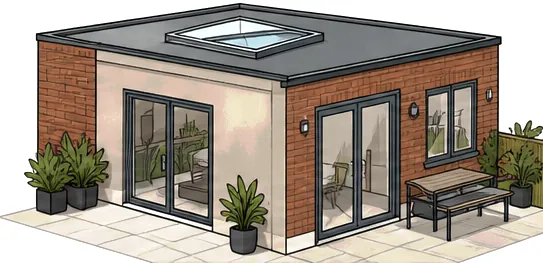
Rear kitchens in Batley were often built as small additions under flat roofs, and many are dark in the middle. A rooflight there needs the flat roof covering to be in a fit state to join to, which we test before quoting.
The houses of Batley, from the market place up
Around the Market Place and the streets that lead off it, the buildings are Victorian: brick and stone terraces, shops with homes above, and chapels and offices converted to flats. Roofs are slate, often with a lower slope over the back, and the loft rooms under them are narrow. A roof window here is fitted between the existing rafters wherever possible, because moving timbers on a roof this old is a last resort.
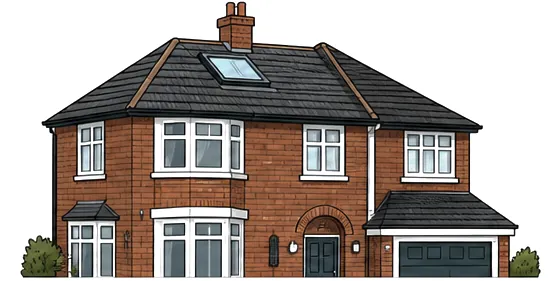
Upper Batley sits on higher ground, and its houses are larger and more spaced out, with gardens and a more open outlook. Detached and semi-detached homes from several periods stand together, and some have been extended upwards or outwards. Rooms in the roof are common, and so is the wish to make them brighter without changing how the house looks from the street.
Around Station Road and Cross Bank the streets are denser, with terraces and a mix of later infill. We read each roof as we find it and avoid assumptions based on the postcode, since two houses a few doors apart can have quite different timbers.
Hanging Heaton, Staincliffe, Batley Carr and Soothill lie around the town centre, and each has its own mixture of older and later housing. Estates of semis and bungalows with tile roofs sit alongside the older rows, and rear extensions with flat roofs are common. Those are the best spot for a flat rooflight or a lantern, and we check the joists and covering at survey.
Condensation and mould can build up in a bathroom, particularly in a terrace where the window faces a wall. An opening rooflight or a ventilated sun tunnel can give steam a way out and dry the plaster out in a way a wall fan alone often cannot. At survey we see where the steam goes at present, whether any extractor vents outside, and how big an opening the room needs.
Roofs in Batley that face the street are on show, and the neighbours will notice a new frame. A flush unit in a dark finish usually sits quietest in slate, and a pair of small units tends to look better than one large one on a modest slope. We talk through how the roof will look from the road before agreeing a size.
Glare and heat deserve a plan. A bedroom under a south slope can get very bright in the morning and warm by afternoon, so blinds, coatings and opening sashes come up at the start. A little thought now saves a room that is lovely in January and unbearable in July.
If you are replacing an old rooflight in a Batley roof, the opening may be square and sound, or it may have moved over the years. We check, and say plainly whether the new unit can drop into the same place or needs some trimming.
Many Batley houses have a loft that is damp-prone because ventilation was never built in. We check the eaves and the ridge, and where a new window would trap damp air, we suggest a vent or an opening sash. It is a small addition that protects the timbers.
Terraced streets often rely on a shared gutter or a joined parapet. Where a new frame would sit close to one, we look at how water will run, so a good unit is not undone by a poor drain. That check takes minutes and saves a lot of trouble.
Neighbours on a terraced street sometimes ask about the noise and dust of a day on the roof. We keep the working area tidy, avoid early starts where we can, and tell the people next door what is happening. A short word on the doorstep saves a good deal of goodwill, and it costs nothing. We also keep access clear for bin collections and deliveries, so the street carries on as normal while the work goes ahead.
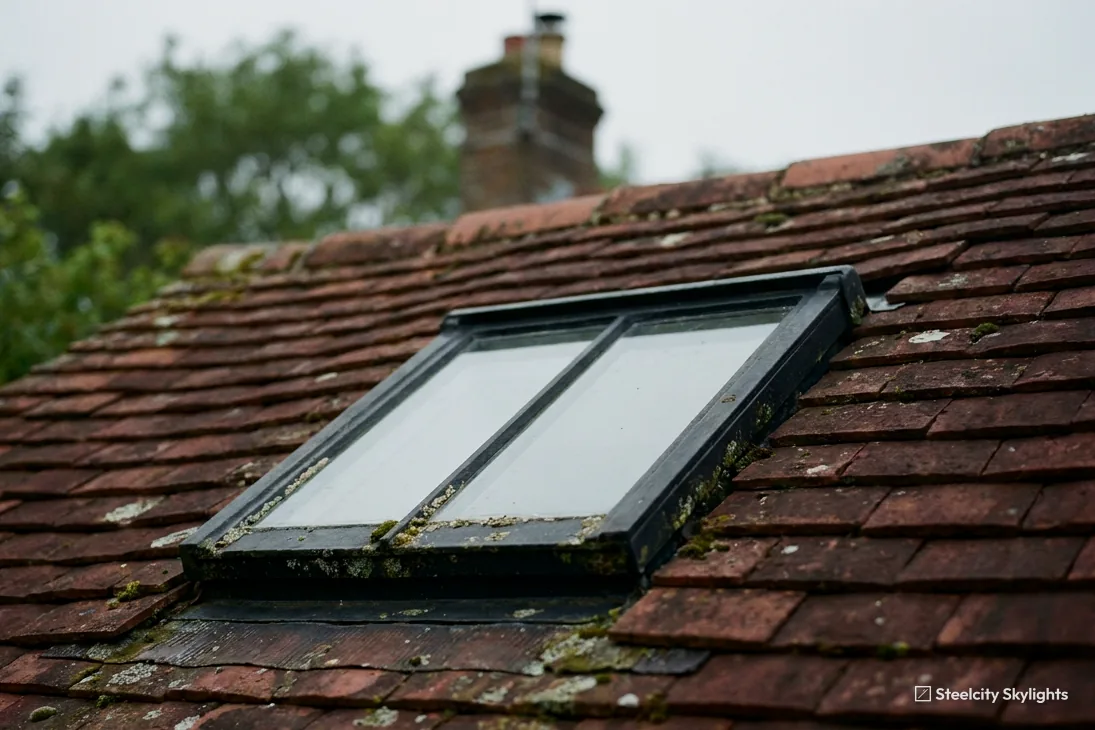
Near the Market Place the slate roofs on the Victorian terraces are old, and the battens behind them may have aged as much as the slates. Around a roof window, the flashing and the edge seals wear first, and the life plan marks when to look at them. Blinds and handles are changed indoors, while the glazing unit means roof work. At survey we lift an edge to inspect the battens and underlay, then measure the rafter gap, so a slim unit can be set between timbers and the street view stays quiet. If a rotten batten turns up, it is replaced before the frame goes in, and the quote lists it.
What we recommend on Batley roofs
Batley's roofs call for a range of answers: slim units for old slate, standard roof windows for tiled lofts, and lanterns and flat rooflights for extensions. Each quote sets out what wears on the chosen unit and how every part is changed.
 Conservation RooflightsFor Market Place buildings, Upper Batley villas and anywhere the roof faces the street, where a flush slim frame suits the slate.
 Roof WindowsFor loft rooms in terraces and larger houses alike, fitted between rafters with a flashing that suits the covering.
 Energy Efficient RooflightsFor exposed roofs on the higher ground, where better glass and tighter seals matter through the colder months.
 Flat Roof RooflightsFor back kitchens and utility rooms with a low flat roof, where a rooflight brings light into a room with one small window.
 Roof LanternsFor wider extensions behind the larger houses, where a lantern spreads daylight down into the heart of the room.
 Electric & Opening RooflightsFor lofts and stairwells where a window is out of reach, and a remote or wall control makes it simple to open.
Batley, Kirklees and the conservation areas
Kirklees Council
Kirklees is the planning authority for the whole of Batley. The planning data we use lists four conservation areas near the centre: Batley Market Place, Upper Batley, Station Road and Cross Bank. Plenty of addresses sit close to one of them. For those, what a roof looks like from the street matters a great deal.
Whether a house can take a roof window or a small rooflight without an application is decided by national rules, and the planning guide linked here holds the figures, so Batley's page leaves them out. Batley's difference is in the buildings: converted chapels, shops with flats above and former mill premises do not carry house rights, and they need an application.
Our practice in these areas is to start with a flush conservation frame on any slope that faces the road, and to ask the council early when there is doubt. On the back slope the choice widens.
Nearly every older house in these areas will have a roof slope visible from a public road or path, and the council tends to look at those. We make a short note of what can be seen from where at survey, so any conversation with the planners is based on the facts and not on guesses.
Conservation areas
Council data lists Batley Market Place, Upper Batley, Station Road and Cross Bank as conservation areas. Whether your address is inside one is answered from the council's own map, which we read at survey.
Around Batley
Dewsbury is the closest, straight down the hill to the south. Ossett and Horbury follow on the south-east side, East Ardsley and Wakefield lie across to the east, and Lepton sits off towards the south-west. Crigglestone and Skelmanthorpe are further out. Each has its own page. The roofs shift as you travel: brick terraces and mill streets around Dewsbury, stone and slate as the land rises, and estates of tile-roofed semis on the town edges.
Batley
A Batley rooflight, from survey to the second decade
-
Survey
Headroom, covering and the line of the slope
We come up from Sheffield, 29.8 road miles to the north, which is a drive of about 44 minutes, and arrange the visit at a time to suit you. We measure from floor to ridge, check the slate or tile and sight along the rafters. On a flat extension roof we test the covering and look at the joists below.
-
Fitting day
Closing the roof in one visit
The opening is cut and trimmed, the frame fixed and the flashing built into the slates or tiles. Inside, the lining is formed and the room cleaned. If the weather is wet, the work is arranged so the roof is never left open overnight.
-
Year 1
The first year in the room
A full year shows how the room behaves with a new light: warmer in summer on a south slope, a little cooler in winter if there is no blind. Note how the sash feels, whether the blind runs smoothly, and any change in the lining. We are glad to hear what you see.
-
Year 12
An honest look at the seals and glass
At around this age the plan from your quote turns to seals, glazing and any motor, giving the method for each swap and keeping the covering undisturbed. Our guarantee on the fitting has run its course by then, and the plan keeps the next steps clear.
Batley homeowners: your rooflight questions
Which conservation areas are near Batley centre?
The planning data lists Batley Market Place, Upper Batley, Station Road and Cross Bank. At survey we go through the council's published conservation boundaries for your road.
My terrace loft is low. Is a roof window pointless?
Not always. If there is somewhere to stand under the opening, even a modest unit can change a room. We measure floor to ridge at survey and tell you straight if a window would not give you a usable space.
Will a south-facing rooflight make the room too hot?
It can, which is why we talk about solar-control glass and blinds at the start. On a south or west slope the choice of coating matters as much as the size.
Can a dark bathroom be lit without a window?
Yes. A sun tunnel brings daylight down through the loft, and an opening rooflight also lets steam out. We pick between them by looking at the roof space above.
Do you cover the places around Batley?
Yes. You will find pages for Dewsbury, Ossett, East Ardsley, Horbury, Wakefield and Lepton too, all inside the area we cover.
Can I add a rooflight to a flat above a shop near the Market Place?
Flats do not have the permitted development rights that houses have for rooflights, so a new one may need planning permission from Kirklees Council before anything is ordered. If you rent, or own a leasehold, the freeholder's agreement is needed as well, and the roof may be shared with the other flats. The work is also notifiable under the Building Regulations, which we handle. Start with a call or message and we can tell you at survey which permissions apply to your building before time is spent on a design.