Skylights & rooflights in Bawtry
Strung along an old coaching road at the edge of South Yorkshire, Bawtry is a market town of brick townhouses, pantile roofs and quiet streets behind. Each quote lists the wearing parts, so a seal or a glass unit can be swapped in future with the pantiles left where they are.

Character roofs and small plots: Bawtry's rooflight questions
In a small town where the roofline is part of the character, a rooflight is seen by neighbours and passers-by as well as by the people beneath it. The question in Bawtry is rarely only whether a unit will fit. It is whether it will look right on that slope, and whether the council will agree.
-
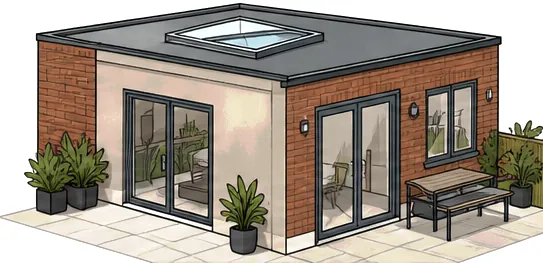
Older roofs with character to protect
Brick townhouses and cottages near the centre carry pantile or slate roofs that have taken decades to weather. A frame that sits proud of the slope or a glass that flashes in the sun is noticed at once. Slim, flush frames and a dark finish let a rooflight read as part of the roof.
-
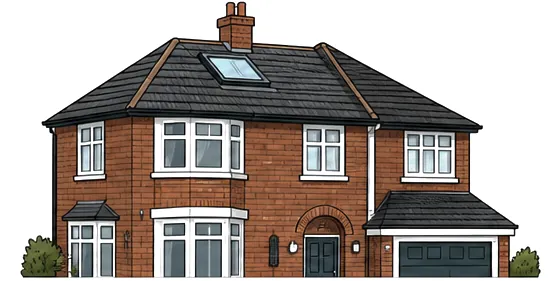
Timber that has moved with age
Old roof timbers settle and bow, and a rafter that was straight when laid may no longer run true. We sight along the slope first and set the opening to the timbers as they are, not as a drawing says they should be.
-

Narrow plots and neighbouring walls
On the streets close to the main road, houses stand shoulder to shoulder, and access for scaffold, tiles and glass is tight. We plan deliveries and lifting at survey so the work does not block a neighbour or the pavement for longer than it must.
Townhouses, pantiles and the streets behind
Bawtry grew along the old road north from Nottinghamshire, and the buildings near the main street show it. Brick houses of two and three storeys stand beside former inns and older cottages, many with pantile roofs and some in slate. A pantile roof needs a flashing kit made for the curve of the tile, and the tiles around any opening are lifted and relaid by hand so the line of the roof stays clean.
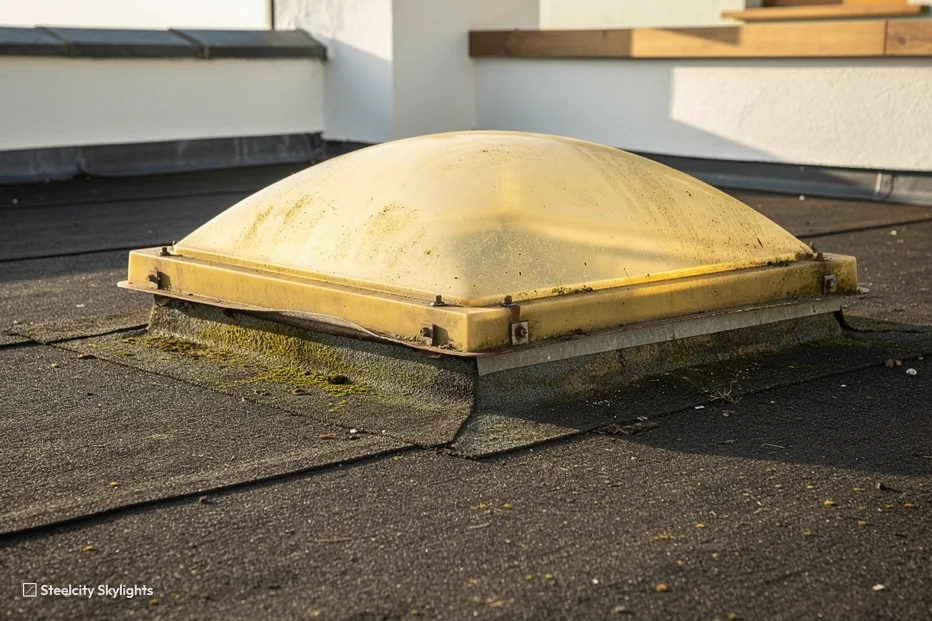
Behind the main street, the town opens out into quieter roads of larger houses, detached and semi-detached, on generous plots with mature gardens. Roofs here are of many ages and shapes, and rear extensions and conservatories are common. A conservatory with an old polycarbonate or early glass roof is one of the likeliest places for a rooflight job, where the question is whether to replace the whole roof or the sealed units within it.
On the edges of the town, newer estates add more modern brick houses with concrete tile roofs and trussed construction. Those are the simplest roofs for a rooflight on a house of normal height, but trussed timbers may not be cut without an engineer's design, so we confirm the type of roof first.
Garden walls and gateposts in the older streets can be tight for a delivery van, and a pane of glass for a lantern is larger than it looks. We measure the route at survey, and where a van cannot reach, the glass is carried from the nearest safe stop. That matters more here than on a modern estate with wide drives. The brick and pantile roofs of the older streets also sit close to chimneys and party walls, and those details are checked before the line of an opening is marked out.
The town sits right on the county edge, and roofs at its fringes face open ground. Wind and rain reach those with little to stop them. The front slope and the sheltered back slope get their own flashing, glass and opening method, because they are different roofs in practice.
Chimney stacks and party walls shape the layout of a roof window more in a town like this than on a modern estate. A stack that stands in the line of a rafter bay moves the opening a few inches, and the frame has to sit clear of it with enough room for the flashing. Those few inches are settled with a tape, in the loft, before anything is ordered.
The old conservatory roof is a good example of how a rooflight job is chosen for the long run. Polycarbonate sheets and early double glazing wear in the sealed edges and the glazing bars, while the frame below may still be sound. A new glass roof is heavier than the sheets it replaces, so at survey we check whether the frame and its supports can carry it, and whether the walls it sits on are in good order. If they cannot, we say so before any glass is chosen and set out what the supports would need. Blinds, vents and handles are all fitted on the room side, so the roof itself is not opened again for small changes.
Rooflights for Bawtry's older roofs and newer extensions
The older housing shapes the work: conservation-style units for character roofs, roof windows for loft rooms, new roofs for tired conservatories, lanterns over bigger extensions. The quote names the unit, flags the parts likely to wear and gives the method for changing each. Where a unit is simply tired and not failed, we say so, and look first at whether seals or glass alone will bring it back.
 Conservation RooflightsFor roofs in or near the town centre, where a flush, slim frame keeps pantile and slate slopes looking as they have for generations.
 Roof WindowsFor the lofts of larger townhouses and cottages, framed into old rafters and flashed to suit the tile.
 Roof LanternsOver the kitchens and garden rooms added behind the larger houses, where a lantern replaces a tired conservatory roof.
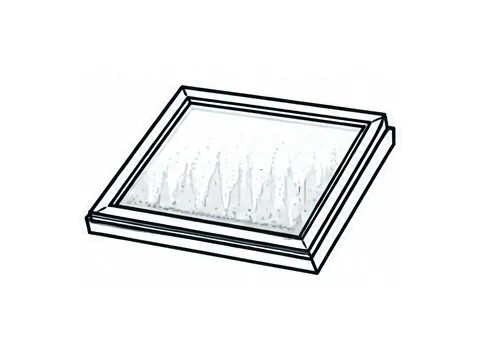 Misted & Failed Rooflight UnitsFor old conservatory roofs and rooflights that have fogged or weep at the seals, with the glazing alone as the first thing to test.
 VELUX WindowsWhere a house already has roof windows from this maker, and a like-for-like replacement or a matched new one keeps the roofline consistent.
 Electric & Opening RooflightsFor tall stairwells and high-ceilinged rooms in the bigger houses, where a motor and rain sensor spare you the pole.
Consents and conservation around Bawtry homes
City of Doncaster Council
Planning applications from Bawtry go to Doncaster. The planning and Building Regulations guide here covers the national conditions that settle when permission is needed for a skylight or low roof window. A lantern standing tall above its roof gets the closest look.
Conservation shapes a lot of rooflight work in Bawtry. Two conservation areas sit close to Bawtry's centre in the published records: Bawtry itself, and Scaftworth, a village just over the River Idle in Nottinghamshire, which falls to Bassetlaw District Council. Within one, the road-facing slope is the sensitive one, and the sensible start is a flush unit on a rear or side slope. The boundary is looked up against your address at survey, and we state plainly what applies before any design is drawn.
A listed building is a separate matter and is not covered by the conservation area alone. If your house is listed, consent is needed for changes to the roof, and we say so at the first conversation so nobody spends time on a scheme that cannot go ahead.
Trees in a conservation area are protected too, with notice needed before work on them. If a scaffold, ladder or crane position would touch a tree, we raise it at survey.
Conservation areas
Bawtry and Scaftworth both have conservation areas in the published data. For a house inside one, the quote starts from a flush unit on a quiet slope.
Building Regulations apply to every installation. The council's building control team and private registered approvers both inspect this work. Managing the notification falls to us, and the completion certificate follows the sign-off.
Working out from Bawtry towards Tickhill and Harworth
Harworth is 2.5 miles south-west of Bawtry, Tickhill 3.6 miles west and New Rossington 3.7 miles north-west. Finningley is 4 miles north, Carlton in Lindrick 6.6 miles south-west and Maltby 7.3 miles west. Armthorpe is 7.7 miles north and Doncaster 7.8 miles north-west. Every one of these is written up separately and lies within our area. Tickhill, like Bawtry, has older streets that raise planning questions. Harworth and New Rossington have more estate housing and bungalows, while Finningley and Carlton in Lindrick are quieter places with larger plots. Closer to home, the quiet roads behind the main street and the newer estates at the edge of the town give two quite different kinds of roof, and each gets its own plan, built around its tile, its timber and its exposure.
Bawtry
A Bawtry rooflight, from consent check to year fifteen
-
Consent check
Looking up the address before drawing anything
Bawtry is 21.9 road miles east of central Sheffield, about 32 minutes by road. Before the visit we check your address against the conservation boundary, so by the time we are standing in the loft we already know what the council is likely to look for. We then measure the rafters, look at the line of the slope and note which tile or slate covers it.
-
Fitting day
Relaying pantile by hand around a new frame
Each tile around the opening is lifted, numbered by course and set aside, then relaid on the new flashing so the curve of the pantile sits true. On a slate roof, the slates are kept and reused as well. Access on a narrow plot is arranged in advance, so scaffold and deliveries stay out of the neighbours' way.
-
First winter
Watching the new unit through the cold months
Look at the reveals after a wet spell and open any sash fully. In older houses with solid brick walls, winter condensation on the glass is usually damp indoor air, not a fault. A trickle vent or a little ventilation after cooking and bathing normally settles it, and we will check the seals if it does not.
-
Year 15
Seals and glass come due
By the fifteenth year, the seals on exposed slopes have had a long run of weather. The written plan with the quote names the seals, the glazing unit and any motor, and describes each replacement, which leaves the tiles round the frame in place.
What people in Bawtry want to know about rooflights
Does Bawtry's conservation area take in my house?
Possibly, if the house is near the main street or in the older part of town. Published data lists conservation areas for Bawtry and for Scaftworth. The boundary is read against your house at the survey, and what it means for the unit is explained before any design begins.
Does a roof window fit a pantile roof without trouble?
Yes. Tiles round the opening come off and go back on a flashing kit made for the curve of the pantile, and the frame is chosen to fit between the existing rafters wherever it can. A slim, dark frame keeps the line of the roof clean.
My conservatory roof is old and tired. Can it be replaced with something better?
It can. The options run from new sealed units in the existing frame, to a full replacement roof, to a lantern if the structure suits it. We look at the frame, the glazing bars and the walls it sits on before saying which is sensible.
Who inspects rooflight work in Bawtry?
You can have City of Doncaster Council's team or a registered approver of your choosing. We make the notification for notifiable work, and the certificate comes to you when the inspection is passed.
What is covered by your 10-year guarantee?
Our own work is guaranteed for ten years, covering fitting, flashings and weathering of the opening. The maker covers glass and moving parts separately, and the written life plan shows how the two divide.
Mature trees shade my back roof. Does that change which unit I choose?
It can. Shade lowers the heat a rooflight takes in, which suits a south-facing slope, but leaves and twigs gather on the lower flashing and in the gutter below, so we look at where the water will run. At survey we note the trees, the aspect of the slope and how far the branches reach. We might choose a window with a vent that opens easily, or a fixed unit if the room needs light more than air. A look at the sill area each autumn takes a few minutes from a ladder placed safely.