Skylights & rooflights in Dronfield
Dronfield is a stone town on the first rise of Derbyshire, about seventeen minutes by road from central Sheffield. Its old stone cottages, hillside semis and newer closes each want a different skylight or rooflight, and each quote says how the parts will be replaced.

What a Dronfield roof does to a rooflight
Dronfield sits on slopes, and slopes decide a lot: which way a roof faces, how hard the wind arrives and how much of the sky a room can see. We begin with the hill and the orientation, then move to the roof covering and the loft, because a rooflight that suits a house in a hollow will not suit one on the ridge.
-
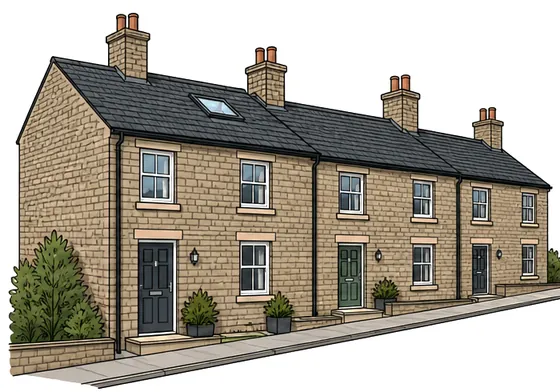
Stone cottages and heavy old slates
In the older streets the walls are thick and the roofs are covered in stone slate or heavy tile. A heavy covering is lifted by hand and relaid, and the timbers beneath may be of uneven section. We size the opening to the timbers that are there and keep the slates for reuse.
-
Hillside semis facing open ground
Houses on the upper streets catch the weather. A south-facing roof window in a bedroom can overheat in summer, and a slope facing west takes rain driven off the hills. We talk about solar-control glass, a blind and the flashing before we talk about size.
-
Three conservation areas in the planning data
The data lists conservation areas named Dronfield, Coal Aston and Moss Valley near the centre. With three to consider, the first thing we do with an address is check whether it sits in one.
How Dronfield is built, from the old core outward
The oldest part of Dronfield is built in local stone, and the houses there are low, thick-walled and often joined in rows that step down the hill. Roof covering varies from stone slate to clay tile and, on later repairs, concrete, so one terrace can show three materials. A roof window in such a slope has to be fitted by someone patient with the covering, and a slim frame sits flush with the slope without drawing the eye.
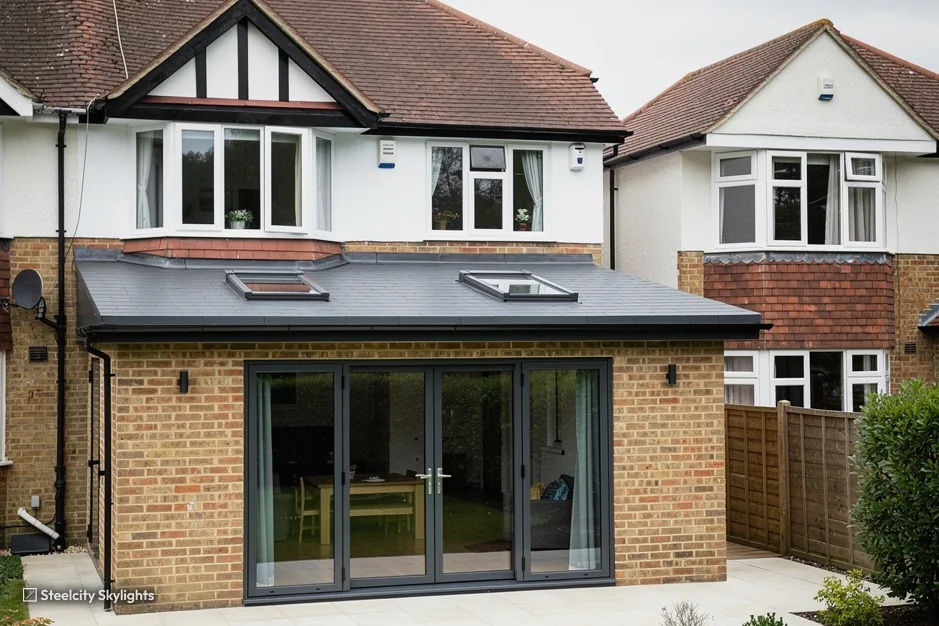
Around the old core the town spread out in the twentieth century, with brick and rendered semis, bungalows and short terraces on estate roads. Roofs are tiled, regular and easy to survey. Many of these houses are within a short walk of a hillside, and the same rooflight can behave quite differently on two houses just a few doors apart, depending on the slope they stand on.
Coal Aston and Dronfield Woodhouse form one continuous urban area with Dronfield and share a similar mix: older stone houses along the main routes and later housing in the streets behind. This page covers them. Coal Aston has its own conservation area in the planning records, so some of its older houses call for the careful treatment given to the stone cottages.
Moss Valley sits to the north-east, where the ground drops towards a wooded valley. Houses near it can have trees close to the roof and a steep approach for the van. We take that into account in the survey, with the access route, the places to stand a ladder and any overhanging branches noted.
Extended houses are everywhere. Kitchens have gone out at the back, loft rooms have been made, and conservatories have been replaced with solid roofs. A replaced conservatory roof or a flat extension roof suits a lantern well, and a loft room under a stone slate slope is where the slimmest roof window earns its place.
Bungalows and dormer bungalows sit among the older houses on the slopes, often with long back gardens that drop away. A rear roof window there looks over the garden and out of sight of the street. The fall of the ground can make access awkward, so we check how materials get to the back before the day is booked.
Hillside gardens bring a practical point. Where the land drops away behind a house, the roof at the back can stand a long way above the ground, and a ladder cannot always reach it safely. We plan scaffold for those houses in advance, and the cost of that access is shown plainly in the written quote and never added later.
Take the stone slate roofs of the old core. Stone slate is heavy, brittle at the edges and laid in courses that shrink towards the ridge, so each slate beside a new opening is taken off singly, and a few may not survive the trip. What wears on such a slope is the flashing and the seals round the opening, long before the frame does, so the kit is chosen to be renewed without stripping the courses beside it. The glazing, the blind and the opening handle can all be changed from the loft or room with no work on the slope. The survey covers the battens under the slates, whether the rafters are sound where the trimming will bear on them, and whether the slates we must lift are likely to survive the lift. If they are not, we say so before the quote is fixed.
Rooflights chosen for Dronfield houses
Stone slate, estate tile and flat extension roofs call for a wide set of units. The work covers conservation-style frames for the older streets, roof windows for lofts, lanterns and flat lights on extensions, and new units where an old light has failed. The quote names each piece that wears and the method for changing it.
 Conservation RooflightsFor the stone houses in the Dronfield, Coal Aston and Moss Valley conservation areas, with a slim frame set flush into the slope.
 Roof WindowsFor the loft of a hillside semi, between rafters, with a flashing matched to the tile or the slate.
 Roof LanternsOver a rear extension or a replaced conservatory roof, bringing light into a room that faces a garden wall.
 Energy Efficient RooflightsFor stone houses with cold, high-ceilinged rooms, where better glazing in the roof makes a difference to winter comfort.
 Electric & Opening RooflightsFor rooms high up the slope that need ventilating in summer, opened and closed from a switch or handset.
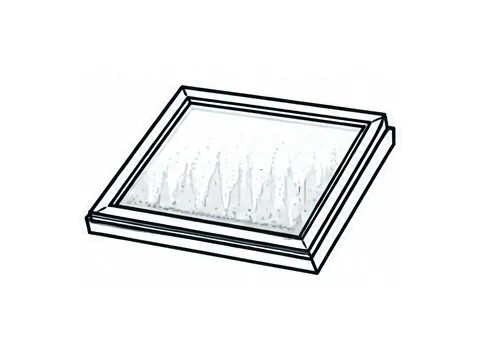 Misted & Failed Rooflight UnitsFor rooflights that have clouded or begun to let in damp, where we weigh a glass swap against a full unit replacement.
Dronfield's conservation areas and the consents that follow
North East Derbyshire District Council
Planners at North East Derbyshire deal with a Dronfield address. A rear-facing roof window of modest size often goes in without an application on an ordinary house. The national conditions behind that sit in the planning guide linked below, so we leave them there. A lantern that stands tall above a flat roof is the one we measure most carefully.
The records place three conservation areas near the centre: Dronfield, Coal Aston and Moss Valley. For a house inside one, a street-facing slope draws more attention from planners, and a slim frame set flush is where we begin. For a house outside, ordinary rules apply, though we still look at your address on the current mapping before saying so.
No Article 4 direction shows near the centre. Stone cottages that have become flats, or barns turned into homes, carry different rights for roof alterations, and listed buildings need consent whatever the roof looks like. If your house is listed, or you are unsure, say so in the first conversation.
Conservation areas
Near the centre the records list three conservation areas: Dronfield, Coal Aston and Moss Valley. Which of them, if any, covers your house is settled from the council's current mapping before we recommend a unit.
Dronfield and the towns that ring it
Dronfield looks out over a ring of small towns. Chesterfield lies south-east at five miles, with Brimington just short of it and Staveley a little further on. Eckington is five miles east and Mosborough close beside it, and Killamarsh is further round to the east. Stannington is across the hills to the north-west. Those places are written up on pages of their own: Brimington and Staveley have older brick terraces where slate needs the same care that Dronfield stone does, while Mosborough and Killamarsh are largely later housing where a roof window in a semi is a quick, simple fit. Chesterfield is big enough to hold both kinds.
Dronfield
A Dronfield rooflight, from a short drive to the long run
-
Survey
Reading the hill, the slates and the loft
Dronfield is about 6 road miles south of central Sheffield, a drive of around 17 minutes, so a survey slots into a working day without much planning. We check which way the slope faces, how the covering is laid, how thick the rafters are and where a ladder can stand on a hillside street. If the house lies within one of the three conservation areas, we put a slim conservation-style frame beside the standard model.
-
On the roof
Stone slate, tile and the flashing that sits on them
Stone slates and old tiles come off by hand, are stacked and then relaid round the new frame, because matching them later is far harder than keeping them now. The flashing is shaped to the covering, and our 10-year guarantee on workmanship applies in full at that junction, which is why we give it the longest stretch of the day.
-
Completion
Inspection and certificate
Notification to Building Control goes in as a step in the job, and the certificate follows once the work is signed off.
-
Year seven
After a run of wet winters on the slope
By year seven, a rooflight on an exposed hill will have had more weather against its seals than one sheltered in a hollow. Look at the rubber, at the lacquer or paint on the frame and at the inside of the glass for any hint of haze. Your quote's life plan itemises those seals, the glass and any motor, and the way each is changed, usually from inside the room.
What Dronfield homeowners ask us about rooflights
Which Dronfield conservation areas might affect my roof?
The records name Dronfield, Coal Aston and Moss Valley. The map decides it house by house, so we pull up the live council mapping for your address during the visit and say straight away what kind of unit we would put forward.
Does an old stone slate roof limit where a roof window can go?
Less than people expect, though it takes patience. Slates round the opening are lifted, numbered and put back, the frame is cut to suit the timbers actually in the roof, and a slim frame lets the slope look much as before. A heavy covering also means we check the support before cutting.
Will a south-facing roof window make my loft room too hot?
It can on a bright day, which is why we raise it before ordering. Glass that cuts solar gain, an external blind or an opening sash that vents the heat all help, and we talk them through at survey, since by then the orientation is known and the choice can be made on facts.
I live in Dronfield Woodhouse. Is that covered by this page?
Yes, along with Coal Aston. They are part of the same built-up area, and the same survey, written plan and guarantee apply. Stone houses in the older parts get the careful treatment, and later housing is more straightforward.
Could a lantern replace the roof of a tired conservatory?
Often, though the base must be able to carry the new weight. A well-insulated solid roof with a lantern set into it is warmer than old polycarbonate, and the lantern keeps the daylight coming in. We look at the walls and the frame before saying yes.
The roof on my Dronfield terrace has three different coverings. Which one decides the flashing?
The covering round the opening decides it, so the survey reads that patch and not the whole slope. Where stone slate meets clay tile or concrete, the flashing kit is matched to the material it will actually sit on, and we tell you if a join between two coverings falls inside the opening. A repair patch of different tile can hide a soft batten, so we lift a few tiles to look. The quote's life plan marks the flashing as a part that will need renewing and explains how that is done.