Skylights & rooflights in Eckington
Eckington is an old village core ringed by decades of later building, and the roofs run from stone-fronted cottages to bungalows and cul-de-sac semis. Skylights, roof windows and lanterns are what we install here, and each quote says which part of the unit will need attention first.

What an Eckington roof has to put up with
Eckington grew in layers, and you can read them from the road: a village centre first, then inter-war and post-war streets, then newer estates pushed out to the edges. A rooflight that suits one layer can be wrong for the next, so we begin at the house and not at the brochure.
-

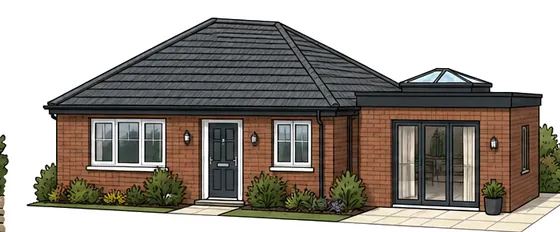
Bungalows with a dark middle
Single-storey houses are a feature of the streets built out from the centre. Their hallways, bathrooms and inner bedrooms sit away from any outside wall, and the roof void above is shallow. We measure that void before promising a tube or a fixed light, because the depth decides which of them fits.
-
Extensions added to older backs
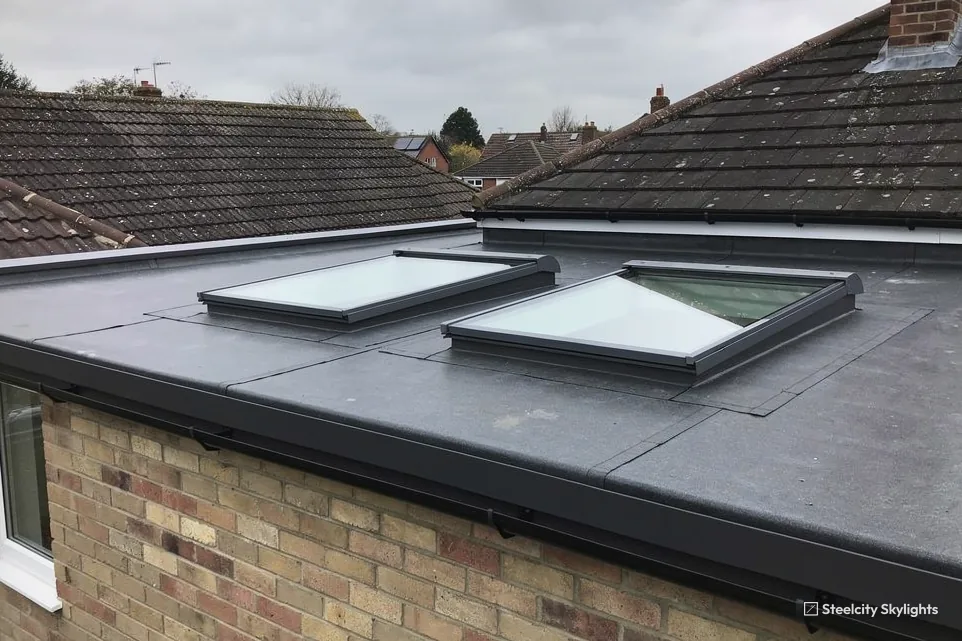
Plenty of the semis here have been given a flat-roofed kitchen or dining room at the rear. The covering on those extensions is of every age, and a new upstand is only as good as what it is sealed to. At survey we walk the roof and test the old covering before we say the new glass can join it.
-
Valley edges and open ground
Where streets finish and fields or woodland begin, a roof meets the wind with nothing in front of it. The seals and flashings on those edge-of-village houses take more punishment than the ones in the middle of a terrace, and we choose the flashing with that exposure in mind.
Eckington housing, ring by ring
Around the oldest part of the village the buildings are a mix of stone and brick, with pitched roofs in slate or clay tile and the odd cottage row that has been knocked together over the years. Loft space here is generous in places and cramped in others, because older roofs were framed by eye. We size a roof window to the timbers actually in the loft, and where a purlin sits in the way we put forward two smaller windows rather than cut through it.
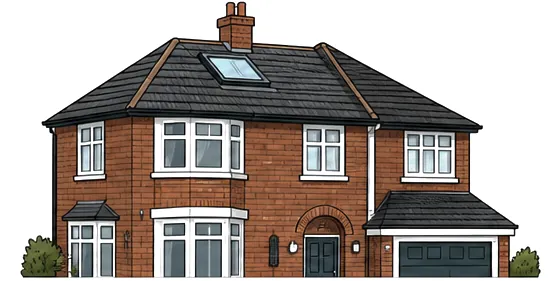
Moving out from the centre, the streets are mostly brick semis and short terraces, roofed in tile with hipped or gabled ends. These are family houses with a landing or bathroom that has no window, and the answer there is often a sun tunnel run across the loft, or a roof window if the loft has already been boarded and used. A good number have gained a conversion at the back, where the new roof opening has to be trimmed into the existing rafters.
Bungalows come in every decade of the last century. Some have a low-pitch tiled roof with a shallow void, some have a steeper pitch that was built with a loft room in mind. We check which you have before suggesting anything, since a tube that needs a long straight run is a different job from a fixed rooflight on a flat section over a hall.
The newest streets around Eckington's edges, including those toward Renishaw, are modern estate houses with trussed roofs and tight loft spaces. Trusses are the limit on those: a bigger opening means cutting members that carry the roof, which counts as structural work, designed and approved before anyone lifts a tile. A narrower window that fits between trusses is often the sensible choice.
Weather across the village is mixed. The centre sits lower and picks up shelter from the buildings around it, while the higher streets and the houses on the outskirts face open air. That changes the sort of flashing we put around a frame and how often it is worth checking the sealant at the edges, so we read each roof for what stands next to it.
The brick semis are where a sun tunnel and a roof window lead to different choices. A tunnel has little to wear: the dome outside, the tube inside and the diffuser at the ceiling. The dome is the part that ages, and it can be changed from the roof without opening the ceiling. A roof window has more moving parts, so the seals, the opening gear and the glazing are the things we list for later. On the survey visit we look at the landing ceiling, the joists above it and the route between the two, because a tube that bends too often loses much of its light. Where the roof is tiled, we also check how the old tiles have been bedded.
Rooflights that fit Eckington houses
The jobs here follow the housing: roof windows for lofts in the older and the semi-detached streets, sun tunnels for the bungalows, lanterns and flat glass for rear extensions, and new glass units where an old light has gone cloudy. The quote names the unit, the parts on it that wear, and the route to changing each.
 Sun TunnelsFor a hall or bathroom with no outside wall in a bungalow, once the void has been measured and a clear run found for the tube.
 Roof WindowsFor loft rooms in the brick semis built out from the village centre, fitted between the rafters with a flashing kit matched to the tile.
 Flat Roof RooflightsFor the rear kitchens and dining rooms added to older houses, where fixed or opening glass sits on a fresh upstand.
 Roof LanternsOver a larger extension that has room for a lantern, bringing light to the part of the room furthest from the garden doors.
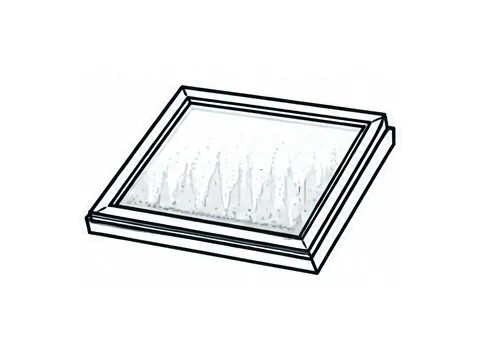 Misted & Failed Rooflight UnitsFor lights fitted to extensions years ago and now clouded between the panes, where we look at the kerb and flashing before replacing the glass.
 Conservation RooflightsFor stone and slate roofs near the old core, where a low, slim frame sits close to the covering and draws less attention from the street.
Planning, conservation and approvals in Eckington
North East Derbyshire District Council
Eckington lies in North East Derbyshire, so planning questions go to that district's planners, and the village sits well clear of the Peak District National Park. For most houses, a roof window or a fixed rooflight lying flat to the slope falls under permitted development, and the national conditions sit in our guide to rooflight rules, which we link to and do not repeat here.
The planning data for the area names three conservation areas close to the centre: Eckington and Renishaw Park, Moss Valley, and Eckington High Street. The data carries no designation dates, which does not alter their standing as conservation areas, so the open question is only where each boundary runs. At survey we look up your address on the council's own conservation map, and if the house sits inside one, we say so before we price and show a flush, slim unit as the first option. The same data shows no Article 4 direction near the centre.
Flats and maisonettes do not carry the permitted development rights that houses have, so for them a rooflight is a planning application, and the freeholder normally has to agree. If the property is a converted house with a shared roof, raise it with us on the first call.
Conservation areas
Three conservation areas are named close to Eckington's centre: Eckington and Renishaw Park, Moss Valley and Eckington High Street. The council's own map settles it at survey, so before the quote you know whether a flush unit is the better start.
On the Building Regulations side, a replacement or new roof window is controlled work. Who inspects it is a choice: the district council's own building control team can do it, and so can a private approver registered for the purpose. We make the notification and book the inspection, and the certificate that follows is worth keeping with the deeds.
Eckington, Mosborough and the ring of villages
Eckington sits between Sheffield's southern suburbs and the Chesterfield side of the county, and the places around it have different roofs. Mosborough is just over a mile to the north, with Killamarsh 1.8 miles up toward the north-east and Staveley under three miles away to the south. Dronfield lies five miles west and Brimington about four miles south-west, and Swallownest, Kiveton Park and Clowne spread across the other side. The Mosborough streets, with their estate houses and trussed roofs, ask different questions of a rooflight than a Staveley terrace, and Clowne's mix of older and newer building changes things again.
Eckington
Eckington: survey, fitting and the check-ups after
-
Survey
Measuring the roof void before we promise anything
From Sheffield it is 9.5 road miles and about 18 minutes by car to the south-east, close enough for a survey on almost any weekday. We go into the loft first on a bungalow, to see whether a tube can run straight or whether a fixed rooflight is the better answer. On a semi we look at the rafters and the tile, and on a rear extension we walk the flat roof and test the covering.
-
Fitting day
Tile, timber and a dry house by evening
On a tiled roof we take off the tiles around the opening and stack them, trim and double the rafters where needed, set the frame with its flashing and then relay the tiles. The loft side is lined and sealed. On an extension we form a level upstand, tie the existing covering into it and test it with a hose before anyone leaves.
-
First wet spell
What to look for after the first real rain
The first heavy storm on a new rooflight is the useful test. Check the reveals and the lining for any damp mark, work the sash right through its range, and see whether the inner face of the pane fogs on a cold morning. Fog there means damp air from a busy kitchen or bathroom, which a trickle vent or the sash itself will clear.
-
Year 10
A scheduled look at seals and sealant
By the end of the first decade the sealant at the edges and the seals round an opening sash have had a lot of weather, especially on the edge-of-village houses with open ground in front. The plan written into your quote lists those parts and the route to each, so the sealant and the sash seals can be renewed without disturbing the tile round the frame.
Eckington roof questions, answered
Is my Eckington house in a conservation area?
It could be if you live in the old centre, near the High Street, in the Moss Valley or around Renishaw Park, since planning data names conservation areas for all of those. At survey we find your house on North East Derbyshire's own map, and you hear the answer before any price is given.
Can a sun tunnel brighten the hallway of an Eckington bungalow?
In most bungalow roofs it can, provided the loft void is deep enough to give the tube a clear run. We measure it at the survey. If the run is too awkward, a fixed rooflight over the hall is the other route, and we tell you which one the roof will take.
Can the flat roof on my rear extension take a lantern?
Often, yes. The joists are cut back to make the opening, an insulated upstand sits on top, and the old covering is lapped up against it. What decides it is whether the existing covering and the joists beneath are sound enough to carry the weight, which we check on the roof.
What guarantee do you give on a rooflight in Eckington?
The workmanship on every installation is covered by our 10-year guarantee. The glass unit and any motor have their own makers' terms, and the plan written into your quote sets out which parts get looked at first.
Do you work in the villages and towns near Eckington?
Yes. Mosborough, Killamarsh, Staveley, Brimington, Swallownest, Kiveton Park, Clowne and Dronfield all fall within the area we cover, and each of them gets a page of its own.
Can a sun tunnel be fitted over a landing in an Eckington semi?
A tunnel works well over a landing when the loft above is clear of tanks and ducts. At survey we follow the tube path between dome and landing ceiling, measure the joist spacing and check for any obstruction. The dome is the part that can be replaced later from outside, without opening the ceiling below.