Skylights & rooflights in Wath upon Dearne
Wath is a proper town with a high street, a conservation area and a mix of Victorian terraces, larger villas and later estates. That range means no single rooflight suits it, so we choose and fit skylights house by house, with each wearing part and its replacement written into the quote.

Three kinds of roof, three kinds of question in Wath
A town of nearly seventeen thousand people has the full run of house types, and a rooflight enquiry from Wath could come from a flat above a shop, a bay-fronted villa or a 1960s semi. The first job is to work out which sort of roof is in question, since the rules and the method differ for each.
-
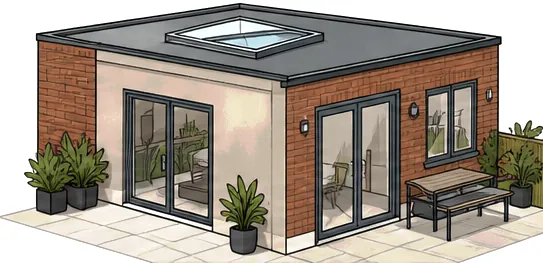
Flats above shops and converted buildings
The streets around the centre include flats over commercial units and houses divided into flats. The roof there often belongs to the building rather than the tenant or owner of one flat, so the first call is to the freeholder, not the glazier. We say so early so a survey is not booked for a job that cannot proceed.
-
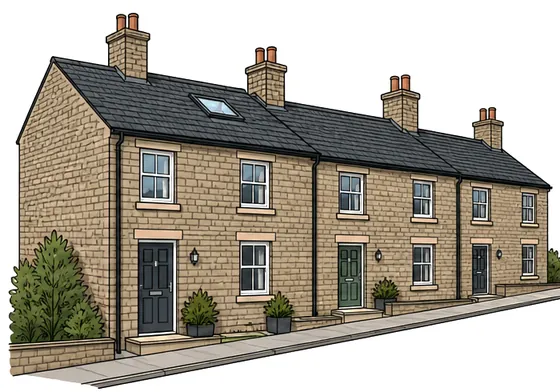
Victorian terraces with deep, dark middles
Terraced houses of some depth have a middle landing and a bathroom that never see daylight. A roof window or a tube can reach them, but the stair, the party walls and the chimney breasts decide where the opening can go, and we plot those before drawing anything.
-
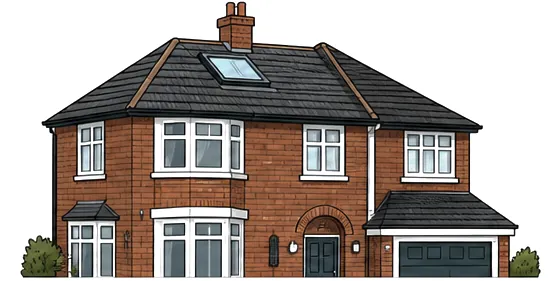
Estate semis with extensions that took the light
Post-war semis on the outer streets have often been widened at the back. The extension adds floor area and removes the window from the old kitchen wall. A flat light or a compact lantern over the new room gives back what was lost.
From the high street outwards, what Wath is made of
The middle of Wath is a town centre in the old sense: a shopping street, a church, shops with rooms or flats above, and terraces running off in tidy lines. Brick is the common material, under slate on the oldest rows and under replacement tile on those re-roofed since. Roof pitches are steep enough to take a roof window comfortably, with enough height at the ridge for a person to stand beside it, and the survey reads both the rafters and the covering above them, which on many rows has been renewed.

Between the centre and the outer streets sit larger villas and substantial semis from the late Victorian and Edwardian years. These have taller roofs, bay windows and attics with real headroom, which makes them strong candidates for a loft room. Two roof windows side by side, one for light and one for ventilation, can suit such an attic, though a conservation area boundary can change what the street will accept.
Past them the estates begin. Semis and short terraces from the post-war decades spread out in loops and crescents, with hipped roofs in concrete tile and gardens that have taken a generation of extensions. West Melton, which sits within Wath's area on our books, adds more of the same, along with newer closes at its edges.
Wath's roofs differ by street more than by date. Two houses built together can have been altered in opposite directions, one with a loft conversion, the other with a flat-roofed kitchen. We learn what a house has become before suggesting what it should add. A villa that kept its original attic stair is a very different job from one that lost it to a bathroom, and the survey exists to find out which you have.
The town lies in the Dearne valley, well east of the Pennines, so the bigger trouble is indoors. Damp air gathers in kitchens and bathrooms at the back of terraces where the ground falls away, and a rooflight with an opening sash or a trickle vent helps those rooms more than a fixed unit. We take that into account when we go through the options.
Take the late Victorian and Edwardian villas, with their taller roofs and attics. Up a steep slope the outer seals and the flashing meet the hardest weather, so they are what ages first. A control pole, a blind or a new lining involves no access to the slates or tiles at all, whereas the glazing, being part of the sash, comes out from outside. The survey on a villa looks at the rafters first, for sound timber and for spacing, then at the covering, which on many of these roofs has been renewed at least once, so the flashing has to suit what is there now and not the original slate. It also looks at the stair and the attic floor, since a window that opens onto a room with no proper way up has little use.
Rooflights chosen for Wath streets
Wath's mixed housing calls for a wide pick: loft windows, conservation-minded frames for the older streets, lights for flat roofs behind and a way to refresh a unit that has failed. The quote lists what wears and how each part is replaced.
 Roof WindowsFor Edwardian and Victorian attics with real headroom, where a pair of windows can turn a loft into a proper room.
 Conservation RooflightsFor houses near the centre inside the conservation area, where a flush frame and slim bars keep the slope looking settled.
 Flat Roof RooflightsFor the flat-roofed back extensions on terraces and semis, where one rooflight brings daylight to a kitchen that lost its window.
 Roof LanternsFor a wider extension on an estate semi, where the room's centre wants height as well as light.
 Energy Efficient RooflightsFor homes with older single or early double glazed units that leak heat on cold evenings.
 Misted & Failed Rooflight UnitsFor the fogged units we meet in houses extended a generation ago, where we first ask if the glass unit alone could be swapped.
Conservation and consent in and around Wath
Rotherham Metropolitan Borough Council
Wath upon Dearne sits within Rotherham borough, and the council there decides planning questions for the town. What a house may do without an application is a national matter, and our planning guide covers it in one place, so this page keeps to local points.
The local point is the conservation area. The council's published data lists one named for Wath-upon-Dearne near the centre. It affects the older streets most, where a roof facing the road is looked at with more care. No Article 4 direction is listed. Your street goes onto the boundary map at survey, and if the roof falls inside it, a slim flush conservation frame is offered alongside the usual one.
Anyone with a flat above a shop, or in a divided house, should know that roof rights belong to houses, not flats. Permission and the freeholder's consent are both needed, and that conversation is worth having before a survey is booked.
Where the work is notifiable we deal with it, and what you end up holding is the certificate issued after the inspection. Put it somewhere findable: a buyer's lawyer will ask, and so might an insurer if a claim ever involves the roof.
Conservation areas
The published data names a Wath-upon-Dearne conservation area close to the middle of Wath, and no Article 4 direction. Before we recommend a frame, Rotherham's mapping is held against your house at the survey.
Wath and the Dearne valley towns around it
Swinton is 1.4 miles south-east of Wath and Brampton the same distance to the west. Bolton upon Dearne lies 1.7 miles north-east, and Mexborough is 2.3 miles east across the valley. Darfield is 2.6 miles north-west, Wombwell 2.7 miles in the same direction, and Goldthorpe 2.8 miles to the north-east. Rawmarsh is 3 miles to the south of Wath. Every one of them has its own page, since the housing shifts from town to town even when the distance is short. The terraces of Mexborough, for instance, are not set out like the Rawmarsh slopes, and a survey in either is read on its own terms.
Wath upon Dearne
A Wath skylight, step by step from survey to year ten
-
Survey
A visit that starts with who owns the roof
Wath is 14.6 road miles north-east of Sheffield, a drive of about 27 minutes, and we plan the visit around you. We ask first about ownership and any conservation boundary, then we measure the room and go up into the loft. Attic height, rafter size, chimney positions and the state of the covering all go on the survey sheet. For a shop-top flat or a divided house we also ask to see the lease or the deeds, since they say who may alter the roof.
-
Fitting day
Opening a Victorian roof without upsetting the street
On a steep slate roof the work is done from scaffold or a roof ladder, and each slate near the opening is lifted and set aside. A top-hung conservation unit has hinges that take the weight of the sash, and our 10-year workmanship guarantee is why we set the frame square before the flashing goes on.
-
First winter
What a Wath terrace shows in the first cold spell
A bathroom or kitchen at the back of a terrace can be damp in winter, and a new pane will show it as mist on the inside. That is a sign of the room, not a leak. Open the sash for a few minutes after a shower. If water appears at the reveal after rain, that is a different matter, and you should tell us.
-
Year 5 to year 10
A look at the seals, then at the moving parts
The life plan names the sash seals for a check around the fifth year and the hinges, stay and any motor for a look by the tenth. Beside each is the method of changing it, and whether the slates round the frame come up. On a loft room the work is done from inside, which is useful on a roof with a busy street below.
Wath homeowners and their rooflight questions
Does the Wath conservation area stop me fitting a roof window?
Not by itself. It means a roof that faces the street is judged more closely, and a flush conservation frame is the sensible place to start. We consult Rotherham's mapping for your address, and at survey we tell you whether the boundary touches the house or stops short of it.
I live in a flat over a shop. Can I have a rooflight put in?
It needs more than a fitter. Flats do not get the usual freedoms for roof changes, so an application is needed, and the freeholder has to agree. Describe your situation when you ring and we will set out what to ask for and in what order.
Can an attic in a Victorian villa take two roof windows?
Usually, if the rafters allow it. Two side by side need a clear run between the rafters, a common trimmer and flashing that links them. We measure the attic and sketch the layout before quoting, so the number of windows is settled on the evidence.
My old rooflight has fogged. Is it the whole unit that has to go?
Not always. If the frame, the flashing and the hinges are in good order, only the sealed glass unit may need replacing. If the frame is worn as well, a whole new unit is the better investment, fitted to current regulations.
Do you work in West Melton as well as in Wath itself?
Yes. West Melton is covered along with the rest of the Wath area, and so are the neighbouring Dearne valley towns, each of which has its own page for local housing and planning notes. The survey follows the same steps, and the unit we suggest depends on the house.
Can I swap the blind or handle on a Wath roof window without a roofer?
For most roof windows, yes. The blind, the control handle or pole, and the inner lining are all reached from inside the room, so nobody needs to go on the roof. The sealed glass and the outer flashing are different, since both belong to the roof and are worked on from outside. Our quote lists each part, who reaches it and how, so you know before choosing a frame which jobs stay indoors.