Skylights & rooflights in Darfield
Set on rising ground in the Dearne Valley, Darfield is a village of red-brick terraces, colliery-era streets and later semis. Skylights, roof windows and lanterns suit different parts of it, and each is fitted so its seals and glass can be exchanged without disturbing the roof round them.

Three jobs a rooflight does in Darfield
The village stands on a slope above the Dearne, and its streets are a patchwork of ages: a historic centre, long terraces laid out for the pits, and estates added since. Each decade built its roofs differently, so the right rooflight depends on which decade your roof comes from.
-
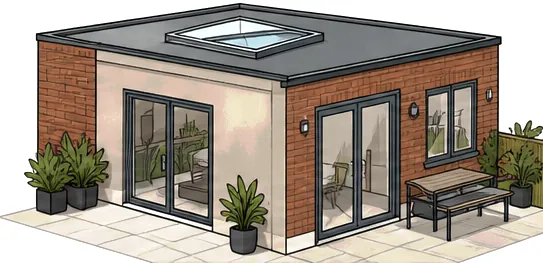
Long terraces with dark middle rooms
Terraced houses are deep and narrow, with windows only at the front and back. The middle of the ground floor gets little daylight, and a rear kitchen under an offshoot roof is often the darkest room in the house. A rooflight over the kitchen or a roof window in the offshoot slope is the simplest way to change that.
-
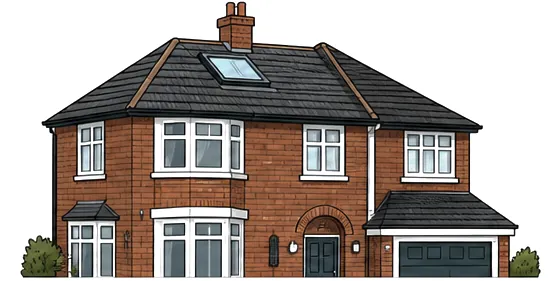
Slate roofs that have been patched
Terrace roofs laid in slate have usually had repairs over the years, with newer slates, tiles or felt mixed among the originals. Before we cut an opening, we find out what sits under the visible surface, because flashing a frame into a mixed roof asks more care than flashing it into an even one. If more than one covering shows, the flashing kit is chosen for the oldest layer we have to seal against.
-

Extensions that outgrew their first rooflight
Plenty of houses here added a rear extension a generation ago, and the rooflight in its flat roof is now misted or leaking at the edges. Replacing it is a chance to improve on the original, with better glass and a proper insulated kerb, rather than to fit another one the same.
Darfield's houses, one street at a time
Walk the streets near the old centre and you meet brick terraces in long rows, built close and plain for families who worked in the local pits. Slate covers the main roof, with a lower, shallower roof over the rear offshoot. The lofts are tight under the ridge, so roof windows are sized to the space between the rafters, and a thin frame disturbs an old slate roof less than a bulky one. Chimney stacks sit on the party walls and have to be avoided when the opening is laid out. Where a terrace roof has been re-covered in concrete tile at some point, the weight and the fixing method differ from slate, and the flashing kit is chosen to suit whichever covering we find.

Closer to the old centre and its lanes the housing is more varied, with some stone and older brick houses, small cottages and a handful of larger houses set back from the road. The roofs here are steeper and have been altered more, and we take longer over them at survey. The council's records show a conservation area in Darfield, which we deal with in the planning section below. A roof that was altered in the twentieth century often hides a mix of timbers, and we open a small section at survey where the owner agrees, to see what is really there.
The outer streets are a mix of inter-war and post-war houses, mainly semi-detached with concrete or clay tile, and bungalows. Several have a ground-floor extension at the back, and some have lofts that were boarded for storage and never lived in. On a two-storey house, a roof window will not do as the way out of a converted loft in a fire. The regulations expect a protected stair, and we go through that before any plans are drawn.
Weather in the Dearne Valley is mild compared with the hills to the west, and Darfield sits on a rise that is more exposed than the flat ground below. A rooflight on a slope looking out over open land catches wind and rain more than one hemmed in by neighbouring terraces, and we pick the flashing and the glazing with that in mind. Ground in this part of the valley has been mined, and old houses can have shifted, so we check that the slope is true before the frame goes in.
Take the slate-roofed brick terraces as the example. A slim roof window set in the slate wears at the flashing soakers and the sill seal first, since slate is heavy and the joint between it and the frame takes the weather. Gaskets and any motor are reached by opening the sash and done from indoors. A misted glass unit comes out on its own while the frame stays in the roof, so the slate around it is not disturbed. At survey we check that the slate is sound enough to be lifted without cracking, the width of the rafter bay, and the chimney stack that often sits on the party wall close to the proposed spot. If the ground has moved over the years, we look for a sagging ridge too, because a frame needs a roof that is true to sit square.
Rooflight work in Darfield
Darfield jobs come from the housing: roof windows into terrace lofts, flat rooflights and lanterns on the extensions behind, sun tunnels for the dim middle of a house, and new units where an old light has given up. The quote lists what wears on the unit and how that part comes off and goes back, and leaves the final choice between options with you.
 Roof WindowsFor loft rooms and rear offshoots on the slate terraces, fitted between rafters and flashed to sit flat in an old roof.
 Flat Roof RooflightsOver a rear kitchen or utility extension, replacing a tired older light with a better-insulated kerb and a glass unit that can be swapped.
 Sun TunnelsFor the windowless landings, bathrooms and halls in the middle of terraces and inter-war semis, where a full window has nowhere to go.
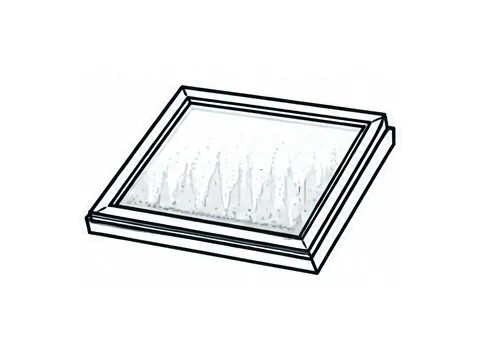 Misted & Failed Rooflight UnitsFor extension rooflights that are cloudy inside or dripping at the edge, where we begin by finding out whether only the sealed glass has failed.
 Walk-On RooflightsSet into a ground-level extension roof or a flat roof used as a small terrace, bringing light to the room below.
 Conservation RooflightsFor the older houses in the old centre and the village lanes, where a slim frame set flush lets a slope keep its character.
What Darfield's conservation area means for rooflights
Barnsley Metropolitan Borough Council
For planning, Darfield answers to Barnsley. Plenty of houses can add a roof window or a small rooflight as permitted development, and our Building Regulations and planning guide holds the national rules. A tall lantern on a flat roof gets the closest look from us, since its height can carry it outside those rights.
Darfield has a conservation area recorded by the council, in and around the old centre. We do not draw its boundary from memory. The council's map is laid over your address at survey, and we ask what extra controls apply. A slope facing the street inside the boundary gets more scrutiny, so we start from a slim, flush conservation unit.
Divided houses lose the permitted development rights of a single dwelling, so a flat needs planning permission before anything else, with the freeholder's agreement alongside. If an earlier extension was built under conditions that limit roof changes, bring the decision notice to the survey and we will read it with you.
Conservation areas
A conservation area is recorded at Darfield. At survey we set your address beside the council's map and look for further restrictions before putting a unit forward.
The Dearne Valley round Darfield
Darfield sits in the middle of a cluster of former mining towns and villages on and around the Dearne. Wombwell is 1.5 miles away, south-west, and Brampton 1.8 miles south. Wath upon Dearne (2.6 miles) and Bolton upon Dearne (2.8 miles) lie south-east, Thurnscoe (2.9 miles) and Goldthorpe (3.1 miles) to the east, Grimethorpe (2.9 miles) to the north and Cudworth (3.2 miles) north-west. All of them are written up separately. The housing across this cluster has a good deal in common, with terraces at the centre and estates around the edge, but the old cores of Wath and Wombwell differ from the cottages and lanes of Darfield, and we read each roof on its own.
Darfield
Darfield skylights, survey to year fifteen
-
Survey
Finding out what lies under the slates
Darfield is 16.1 road miles from central Sheffield, about 28 minutes to the north, and we arrange the visit around you. On a terrace we look at the slate and what has been done to it, the rafter spacing and the chimney stacks, and we sight along the ridge for any sag. A rear kitchen with a flat roof gets its covering and joists examined. If the address is near the conservation area, we say so and show a conservation unit beside the standard one.
-
Fitting day
Working round stacks, party walls and old repairs
Slates around the hole are set aside in order, ready to go back. The frame sits clear of the party wall, and the rafters are trimmed where the opening needs it. A flat roof gets a kerb built level, sealed into the covering and tested with water, and those joints are the ones our 10-year guarantee rests on. A notification to Building Control, where the work requires one, goes in during the same step.
-
First winter
What a new rooflight should show you by spring
After the first cold snap, look at the glass on a frosty morning. Mist on the glass indoors means damp air in the house, and the kitchens of terraced houses show it most, so an opening sash or a vent will usually deal with it. After a night of heavy rain, check the reveals are dry. If either test goes wrong, tell us and we come back to look. A sash worked through the whole season tells us far more than a dry week in summer would.
-
Year 15
The seals and the glass come up for inspection
About fifteen years on, the seals will have seen a good deal of weather. The life plan from your quote lists every part that wears and the way it is changed, so the work can be carried out from inside or from the roof surface, with the slate or the flat covering around the frame left intact.
Darfield homeowners on rooflights
Does Darfield's conservation area include my street?
It may, if you live in or near the old centre, where the council has recorded a conservation area. We lay its map over your address at survey and say what extra controls apply before recommending a unit.
How do I light the dark middle of a terraced house?
A roof window in the offshoot slope or a flat rooflight over the rear kitchen is the usual route. For a hall or landing with no outside wall, a sun tunnel carries daylight down through the roof void in a narrow reflective tube.
The rooflight on my extension has started to leak. Can it be replaced?
Yes. We first find out whether the glass unit, the seals or the kerb flashing has failed, because each is fixed differently. Where the whole unit is tired, we replace it with one whose parts are changeable later.
Can I turn my loft into a bedroom with a roof window?
Sometimes. Headroom and the rafters have to allow it. Upstairs rooms on a two-storey house need a protected stair as the escape route, which a roof window cannot replace, so we talk that through before any drawing starts.
Do you cover the Dearne Valley villages near Darfield?
Yes. Wombwell, Brampton, Wath upon Dearne, Bolton upon Dearne, Thurnscoe, Grimethorpe, Goldthorpe and Cudworth lie within our reach, and each has a page on its own housing and planning.
Does the age of the slate on my Darfield terrace affect a roof window?
It does, because old slate can crack when it is lifted. At survey we tap and lift a few slates near the proposed opening to see how brittle they are. If they are tired, we allow for replacement slates in the quote, so the new flashing is dressed into sound material and the covering stays weathertight.