Skylights & rooflights in Buxton
Buxton sits high in the Peak hills, where roofs take rain, frost and wind in a measure the Sheffield suburbs rarely see. Our skylight and rooflight work here takes in new roof windows, lanterns and replacements, each one picked so that wearing parts such as the seals and any motor can be swapped later with the roof left closed.

What Buxton's weather does to a roof opening
Buxton is among the highest market towns in England, and the weather arrives early and stays late. A rooflight that would be perfectly comfortable on a suburban semi in Sheffield has to put up with more driving rain, more frost and more grey, damp days here, so we begin with how your roof is exposed and only then pick a frame.
-
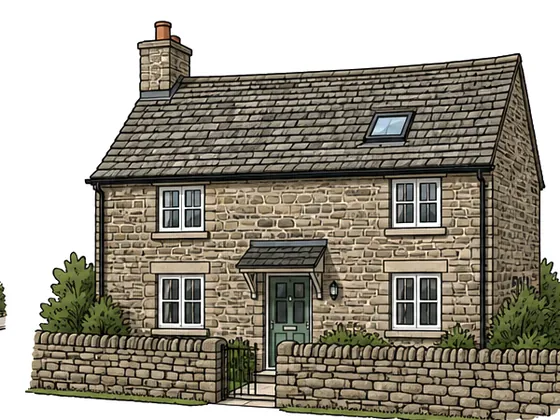
Stone terraces with thick walls and steep pitches
The streets around the centre are built in stone, with deep walls, steep slate or stone-slate roofs and attic rooms that slope down hard on both sides. A roof window is cut into heavy material there, so the rafter spacing and the weight of the covering decide how large an opening we can safely propose.
-
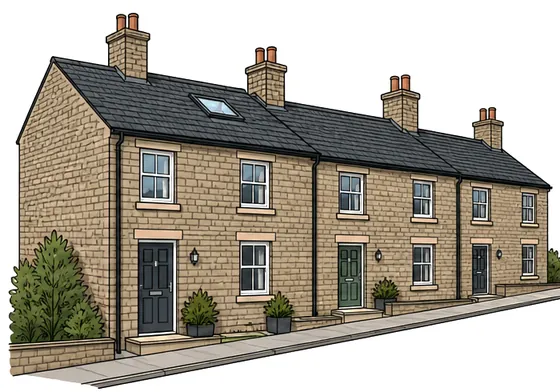
Long frosts on glass and flashing
Winters run long, and a pane that sits at freezing on the outside meets warm kitchen or bathroom air on the inside. We pay close attention to the thermal break in the frame, and to where condensation will run when it forms, so that it drains to a channel instead of into the plasterwork.
-
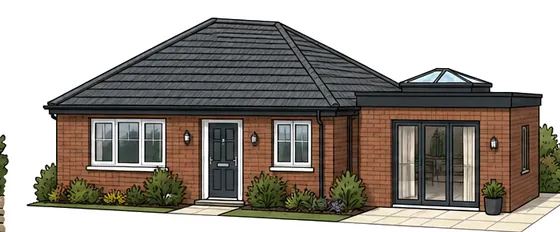
Open edges that catch the wind
Streets on the Burbage side and on the slopes above the centre meet the wind head on. A flashing that keeps water out when rain moves sideways, and fixings sized for gusts, matter more up here than the finish on the frame.
Buxton's houses, from the spa streets outward
Around the centre the stock is mostly Georgian and Victorian, laid out when Buxton was a spa and a stream of visitors needed somewhere to stay. Grand terraces and tall villas in grey stone stand beside narrower streets of workers' houses, and a good number of the larger buildings have since been split into flats or turned to other uses. Their roofs are slate over heavy timbers, and the old attic rooms were often servants' quarters, low and dark, which is where a roof window earns its keep.

Away from the centre the ground rises and the houses change. Fairfield has stone terraces and Victorian semis spreading up the hill, with a good deal of later infill between them. Burbage, on the way towards the moors, mixes stone cottages with later semis in brick and render, many now carrying a loft room or a rear extension. Those extensions are where a flat rooflight or a lantern turns a dim kitchen into a room people want to sit in.
Newer streets on the edges of town were built with trussed roofs in concrete tile, and the open loft inside them is a web of timber that was never meant to be moved. A new opening there is a structural question before it is a glazing one, because the trusses, not the rafters, carry the roof. We look at the roof void at survey, draw the opening between the members where we can, and say plainly when a job needs a structural engineer.
Because Buxton is high and wet, the condition of the roof around a rooflight matters as much as the unit. Old slate that has been patched many times may need a section relaid for the flashing to sit true, and stone slates are heavy and brittle when lifted in frost. We plan the fitting for dry spells, keep every lifted slate or tile, and tell you at survey if a section of the covering needs attention before a new frame is worth setting into it.
Roof glazing for Buxton's stone houses and extensions
Buxton's stone and slate suggest the mix: roof windows in the attics, lanterns and flat rooflights on the extensions behind, replacements for lights that have failed, and quieter units where the roofline is protected. Every quote lists each unit's ageing parts and how each is changed, so you pick knowing what upkeep to expect.
 Roof WindowsFor the sloping attic rooms under the slate of Fairfield and the older terraces, set between the rafters and flashed carefully into heavy stone-slate or slate.
 Conservation RooflightsFor streets near the centre where the council's conservation map is worth a look, a flush, slim-framed unit keeps the roof slope reading as it always has.
 Energy Efficient RooflightsFor a town that stays cold well into spring, a unit with a warm-edge spacer and a good frame break, chosen to keep the room beneath it comfortable.
 Roof LanternsAbove the back kitchens and dining rooms of Burbage semis that have been extended, bringing light to a room where the nearest wall window is far away.
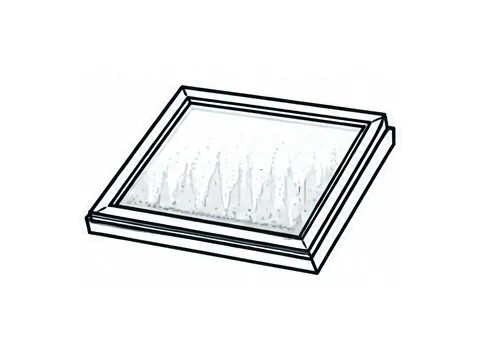 Misted & Failed Rooflight UnitsFor rooflights gone cloudy inside the glass after years of frost and damp, with the opening question being whether a fresh sealed pane alone would do the job and leave the frame in place.
 Electric & Opening RooflightsFor high bathrooms and stairwells where a sash is out of reach, with a rain sensor so the light closes itself when the weather turns.
Buxton, High Peak planning and the conservation map
High Peak Borough Council
Planning applications in Buxton go to High Peak Borough Council. The town stands outside the National Park, so High Peak's policies apply, though a house just across the boundary falls under the National Park Authority instead, and we confirm which applies when we have your postcode. For the permitted development conditions that decide most roof window and rooflight jobs, the planning and Building Regulations guide carries them, so they are not repeated on this page.
Buxton's spa history shows in its streets. Conservation areas in the central streets carry names such as The Park, Central, Hardwick, College and Fairfield in the council's records. Inside one, the street-facing slope is where a rooflight gets noticed, so the frame, the size of the glass and the way it sits against the slate all become part of the conversation. At survey the council's own map is consulted for your address, so nothing rests on a guess from the street name.
Flats and converted houses are common in the older streets. Roof work on a flat is outside permitted development, so a converted villa needs a planning application for a new rooflight wherever it stands, and the freeholder must agree as well. We mention it on the first call, ahead of any survey visit, so no drawing time is lost on a scheme that cannot proceed.
Conservation areas
Near the centre the council's records name the areas The Park, Central, Hardwick, College and Fairfield. A unit is proposed only after your address has been matched to that map.
Among them
- Park
- Central
- Hardwick
- College
- Fairfield
When the work is done you receive the Building Control completion certificate for the installation, and we handle the notification that produces it, whether the inspector comes from the council or from a registered building control approver. File it with the deeds, since the next owner will want to see it.
Buxton and the towns beside it
Buxton is the centre of a cluster of High Peak towns, and we work across all of them. Chapel-en-le-Frith lies about four miles to the north, with Whaley Bridge a little further to the north-west and New Mills beyond it. To the east, ten miles off, is Bakewell, where the Peak District National Park rules come into play. Glossop is some thirteen miles north, with Hattersley and Hadfield just beyond, and Darley Dale lies to the south-east. Each of them has a page, with housing and planning notes of its own. The stone terraces of Chapel-en-le-Frith and the mill streets of Whaley Bridge ask different things of a roof window than the larger villas of Buxton itself, and we plan accordingly.
Buxton
Fitting and keeping a rooflight in Buxton
-
Survey
Reading a stone roof before we quote
Buxton is 26.6 road miles south-west of Sheffield, about 49 minutes by road, so the visit is booked around your day and we allow for the climb at the end. On the roof we check the covering, the pitch and the rafters or trusses beneath. We look inside the attic for damp and for the line of the walls, and we note where scaffold can stand on a steep or narrow street. If the house is close to a mapped conservation area, we tell you at that visit and show a flush unit alongside the standard choice.
-
Fitting day
Working a frame into stone-slate and slate
Heavy stone slates and old natural slate are lifted by hand, stacked in order and relaid around the new frame, because matching them later is difficult. The flashing we form at that joint carries the 10-year guarantee, and we run water over it before the scaffold comes down. On a flat extension roof we form an upstand, true to the level, and seal it to the covering. We choose a dry day for the opening, and cover the room beneath until the frame is weathertight.
-
First frost
What the first cold snap shows
A Buxton winter is a fair test of a new rooflight. After the first hard frost, look at the glass from inside: a faint film of condensation on a cold morning comes from humid air in the room and signals no fault; the vent in the frame or the opening sash clears it. Check that the sash closes with an even pressure all the way round, and that no draught reaches the reveals. Anything that looks off is easier to correct in the first season than the fifth.
-
Year 12
When the exposed parts ask for attention
The seals on a rooflight facing the wind will have worked harder by now than those on a sheltered slope, and frost cycles are hardest on rubber and sealant. The written plan agreed at quote stage names the exposed seals, the glazing unit and any motor, with the method for replacing each, indoors or out on the slope, and a note on whether nearby slate has to move. That makes year 12 a planned visit, with no guesswork about what comes off.
Buxton roofs: your rooflight questions
Is Buxton inside the Peak District National Park?
The town is not. Its planning authority is High Peak Borough Council. A house on the far edge of the town or in the countryside beyond can be a different matter, so we check the boundary against your postcode before we advise on planning.
Will a rooflight cope with a Buxton winter?
A well-chosen one does. We look for a frame with a proper thermal break, a glass unit with a warm edge, and a flashing detailed for driving rain. A film on the glass at dawn in January usually comes from humid air inside the house and is no defect; a vent in the frame or an opening sash keeps it down.
Does an old stone-slate or slate roof rule out a roof window?
No. Slates and stone slates beside the opening come off by hand and go back round the new frame, which is sized to the rafters already there. We tell you at survey if a patch of the roof needs attention first, because it is better to fix it while the roof is open.
My house is in a converted villa. Can I add a rooflight?
Permitted development does not cover flats, so the application goes to High Peak Borough Council and the freeholder is normally asked to consent. We can describe the unit and the roof detail to support an application.
Is the rest of the High Peak within your area too?
Yes. Chapel-en-le-Frith, Whaley Bridge, New Mills, Glossop and the rest of the High Peak are in our area, as are Bakewell and Darley Dale. Every one gets its own page here, written for its own streets.