Skylights & rooflights in Chapel-en-le-Frith
In this High Peak market town the hills rise close on every side, and the houses are stone terraces, farmhouse-style cottages and later estates. Skylights, roof windows and lanterns go in and come out under our hands, and each is picked so that its seals, glass and motors can come out later and the roof stay whole.

What a Chapel-en-le-Frith roof has to withstand
Up here the weather is part of the brief. The town sits high on the western edge of the Peak, with open hills close by and the Park boundary not far off, and rain arrives harder and colder than it does in the east. A rooflight chosen for a sheltered suburb can struggle on a roof like this, so we start from the exposure and the stone, not from a catalogue.
-
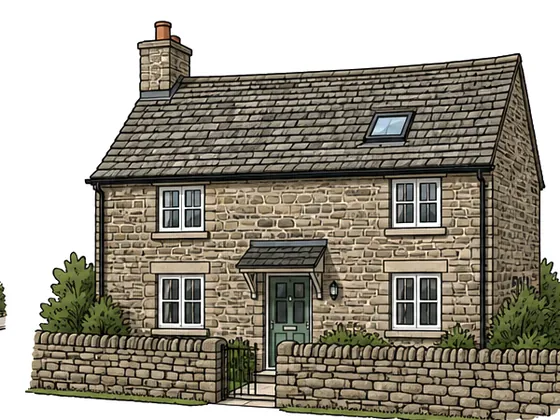
Stone roofs that are heavy, old and uneven
Stone or slate on an old timber frame is far heavier than a modern tile roof, and years of load leave the slope with dips and waves. We eye along the rafters before fixing anything, since a settled roof needs packing out so the opening runs true, or the sash will catch.
-
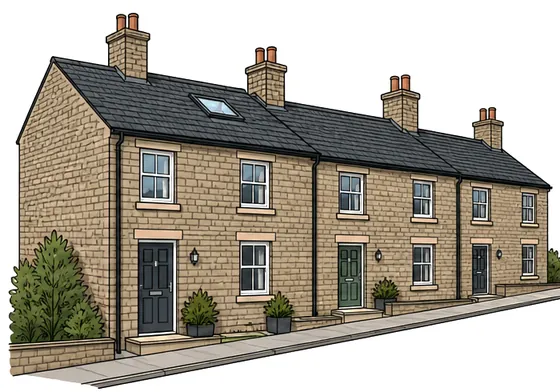
Wind and wet from the hills
A roof here takes wind-driven rain more often than one in a lowland town. Aspect and shelter come first. After that we choose a flashing that sheds water arriving sideways, and glass that copes with cold mornings.
-
Four conservation areas close to the centre
The council's data names conservation areas for Chapel-en-le-Frith, Town End, Chapel Milton and Wash. Between them they cover a good part of the older town, and it means the first question on many addresses is not which unit, but whether a flush conservation rooflight is the better choice.
Chapel-en-le-Frith's houses, lane by lane
The older housing is built of local gritstone, in terraces, pairs of cottages and larger houses that sit along the streets of the old town. Stone slate or blue slate covers many of the roofs, and the walls are thick enough that a loft room often has deep window reveals and low eaves. A roof window there has to fit the gap between the old rafters, and a slim frame set flush into the slope looks far better than a deep one.

Around Town End and Chapel Milton the housing is a mix of stone cottages and later infill, with some houses at the end of a lane and others in a row. Chapel Milton is a smaller cluster of its own, and Wash is named in the council's data too. In all of these, the roofs differ from one plot to the next, so we survey each house on its own merits instead of assuming a pattern.
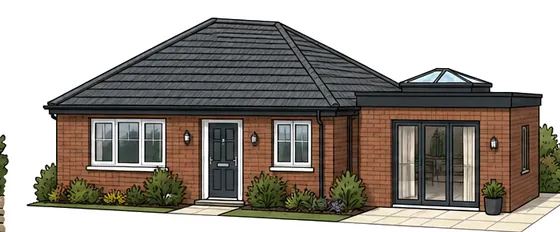
Away from the old core, the town has later housing in brick and reconstituted stone: semis, bungalows and some detached houses with tiled roofs, many with a low extension added at the back. A flat extension roof there suits a lantern or a flat rooflight well. A newer house with a trussed roof asks different questions, where a wider opening means cutting through trusses, which is structural work.
Chapel-en-le-Frith is higher and wetter than the towns to the east, and what one roof meets is different from what its neighbour does. A house on the slope facing the hills takes the weather head on; a terrace in a dip is more sheltered but damper. We read each roof for its position and exposure, then pick the glass and the flashing to suit it.
Wet air is a regular companion in the hills. A loft room with a window newly cut into it can feel the difference at once, and old stone walls hold moisture for a long time. We talk through ventilation at survey, because a trickle vent or a sash that opens often matters as much to the room as the size of the glass.
Whatever the age of the house, a first conversation about the roof tends to start with the same question: where does water go when it runs down this slope? Answering that tells us where the flashing must be strongest, which side of the opening to build up and whether a sash that opens will ever be in the way of a gutter or a chimney.
Take the blue slate roofs on the stone terraces. Blue slate is thinner and more regular than stone slate, so it lifts and relays cleanly around a frame, but the nails behind it are the weak point. Where the slope faces the hills, the flashing and the seals take the weather first, and that is what wears. Indoors, the opening gear and blind can be renewed with no work on the slope. The survey takes in the slates near the opening for slip, the underlay beneath and the condition of the battens, and the depth of rafter and insulation that the inside lining has to pass through. A deep build-up gives a deep reveal, so the lining is shaped to carry light into the room instead of leaving a tunnel.
Rooflights for stone and slate in Chapel-en-le-Frith
What we install follows the housing: slim conservation units for stone and slate roofs, roof windows in lofts, with lanterns and flat rooflights for the back additions, and fresh glazing for older lights that have given up in the damp. Each quote sets out the unit, its wearing parts and the way each one is swapped later.
 Conservation RooflightsFor stone and slate roofs inside the four conservation areas, where a flush frame and slim glazing bars keep the slope looking as it did.
 Roof WindowsFor the loft rooms of stone terraces and cottages, dropped between the old rafters and sealed into the slate.
 Roof LanternsOver rear stone-and-glass extensions, where a lantern lets the room look up at the hills instead of at a blank ceiling.
 Energy Efficient RooflightsFor cold, exposed slopes where the glazing and frame matter more, so the new unit loses less heat than the old one.
 Electric & Opening RooflightsFor lofts and landings where the glass is beyond arm's length, so a powered opener with a rain sensor deals with ventilation in changeable weather.
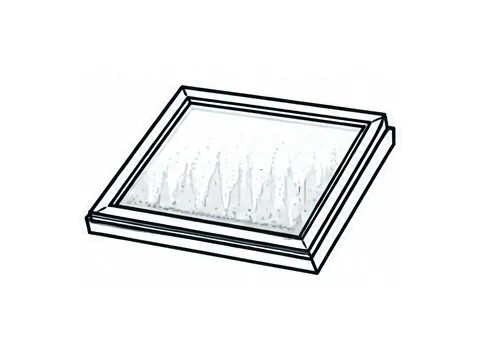 Misted & Failed Rooflight UnitsFor older lights fogged between the panes by damp air, where only the sealed glass may need renewing.
Planning near the Park edge and in four conservation areas
High Peak Borough Council
Chapel-en-le-Frith is planned for by High Peak Borough Council, with the Peak District National Park just beyond the town. Permitted development allows many houses a small roof window; the national limits are explained in our planning guide. Height is the thing to watch with a lantern that stands tall on an extension roof.
The council's data names four conservation areas near the centre: Chapel-en-le-Frith, Chapel-en-le-Frith Town End, Chapel Milton and Wash. We do not guess where the edges fall. At survey your address is held against the council's map. A house inside one of the four gets a flush conservation unit quoted alongside the standard unit.
Because the Park boundary is close, we also check which side of it a rural address sits on. Inside the Park, the Peak District National Park Authority is the planning authority and applies its own policies to roof alterations. The council's data shows no Article 4 directions near the centre.
Old cottages often carry alterations from several owners. A dormer, a rear extension or a rooflight put in decades ago can reduce what is still permitted, so the survey checks the roof's history against the planning guide.
Flats and maisonettes lack permitted development for roof work, so any rooflight in one means planning permission and the freeholder's consent.
Conservation areas
The council's data names four conservation areas near the town centre: the town itself, Town End, Chapel Milton and Wash. The map is read for your address, and for any extra controls, first.
Building Regulations apply to every job. If it is notifiable, we notify Building Control, and the council or a registered approver carries out the inspection.
Close to Chapel-en-le-Frith: Whaley Bridge and Buxton
Chapel-en-le-Frith sits in the High Peak. Whaley Bridge is the closest town, 2.9 miles west, and Buxton is 4.4 miles south. New Mills lies 4.6 miles north-west, and Glossop 8.4 miles north. Hadfield and Hattersley are both 10 miles off, to the north and north-west. Bakewell is 12.4 miles south-east, and Stannington, on the Sheffield side, is 16.2 miles east. We cover them all. The housing changes with the setting, from stone terraces in the valley towns to the market-town streets of Buxton and Bakewell, and the roof windows or lanterns that suit a house there change with it. Gritstone and slate run through Whaley Bridge and New Mills too, while Buxton and Bakewell bring larger stone houses and a different scale of roof.
Chapel-en-le-Frith
High Peak roofs, from the first visit to the long run
-
Survey
Reading a stone roof before quoting
Chapel-en-le-Frith is 23.8 road miles west of central Sheffield, a 44-minute drive, and the survey is fitted around your week. On an old stone or slate roof we check how the slates are fixed, how much the slope has settled and how thick the rafters are. We note the aspect and the shelter, and we hold the address up to the conservation map at the same visit.
-
Fitting
Working with stone slate and heavy roofs
Slates round the opening are lifted one at a time and stacked for relaying, because matching old stone slate later is far harder than saving it now. A trimmed rafter is doubled and fixed before the cut is made. The new flashing is dressed to the roof's own profile, and the frame is checked for square against a slope that is rarely true.
-
First hard winter
Seeing how the unit copes with frost and wind
The hills give a new rooflight a proper test. After a frosty night, check the room face of the glass for fog, which means moist air indoors, not a defect. After a gale, look along the reveals for any trace of water, and swing the sash fully open. Cold, wet weather finds weaknesses in a fixing faster than a mild season does.
-
Year 10
The seals take a look
Ten years in, a unit on an exposed slope has taken more from the weather than one in a sheltered street. Your quote carries a plan for what wears and how each part is renewed, with the stone slate round the frame left alone. On handover, our workmanship goes under a 10-year guarantee.
Rooflights in Chapel-en-le-Frith: your questions
Which of the Chapel-en-le-Frith conservation areas is my house in?
Possibly none, possibly one. The council names four near the centre: Chapel-en-le-Frith, Town End, Chapel Milton and Wash. Boundaries are not for guessing, so at survey the council's own map is consulted before a unit is recommended.
Is it possible to fit a roof window into an old stone slate roof?
Yes, with care. The slates are lifted carefully and reused, the window follows the rafter spacing where it can, and a slim frame set flush into the slope sits best. We check the slope first, because an old roof is rarely true.
Will a rooflight cope with the weather up here?
It can, when the flashing, the fixings and the glass are chosen for the exposure. We note the slope's aspect and its shelter before picking the unit, and the life plan names the seals so they can be looked at on a fixed schedule.
My house is near the edge of the National Park. Does that change anything?
It can. Inside the Park, the National Park Authority is the planning authority, not the borough. Chapel-en-le-Frith town itself is outside, but we check which side a rural address falls on before we say what is allowed.
Do you cover Whaley Bridge, Buxton and the villages around?
Yes. Whaley Bridge, Buxton, New Mills and Glossop all lie inside our area, as does Bakewell further south-east.
Does a deep reveal through the roof of a stone terrace change which roof window I choose?
It can. A deep reveal cuts down the light that reaches the room, so the lining is angled outward to widen the view and carry daylight further. A taller or wider frame than the rafters first suggest may be worth considering if the structure allows. Splayed linings are finished from inside, which makes them easy to redecorate. We measure the reveal depth at survey and show the angle in the quote, so the finish is agreed before the day.